
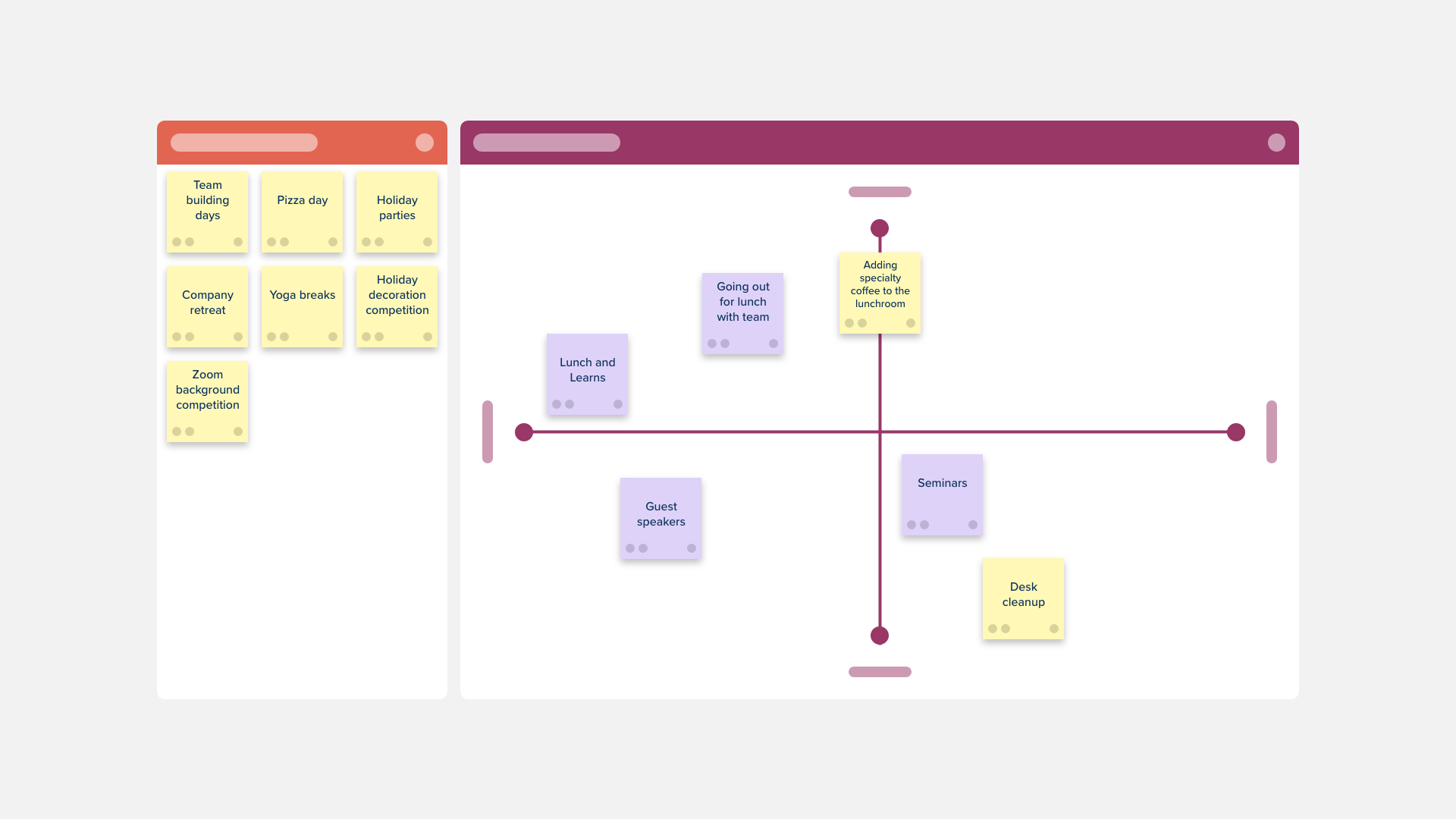
Enjoyment Vs. Purpose Matrix
Description
Revaluate your priorities, both personal and professional, with the Enjoyment vs. Purpose Matrix Template.
The template contains a section where you can add everything that is on your current and future to-do list, and then you can plot each item on the matrix depending on whether it is your priority, someone else’s priority, something that you find energizing, or something that you find depleting.
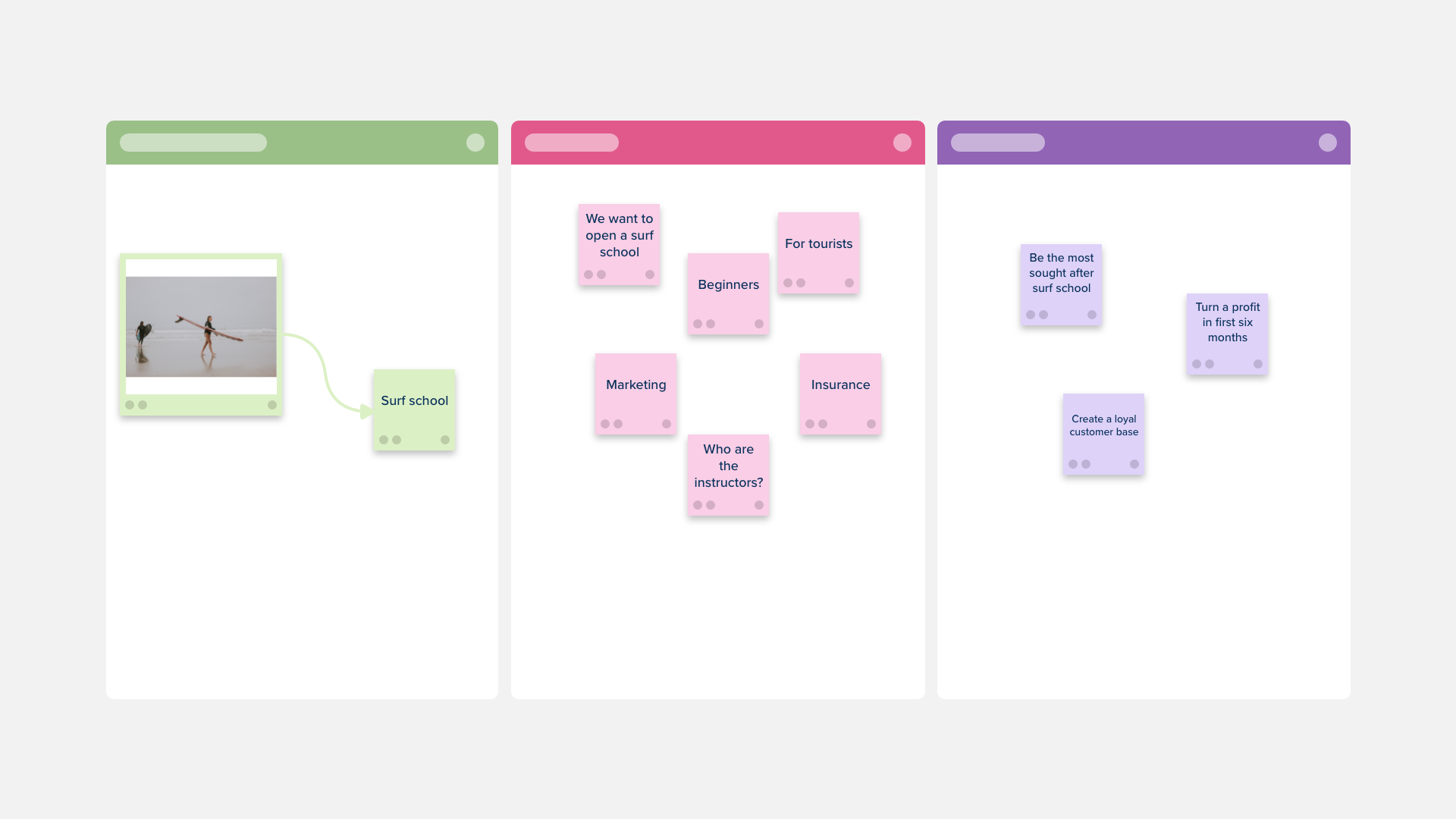
Plan your approach to making a decision to improve outcomes and predictability. Outline factors involved, details, and possible roadblocks on the template.

This template allows teams and users to stop and reflect on an ongoing (or failed) project or process, strategize on improvement, and re-start with better insight and planning.

The Difficulty vs. Annoyance Matrix Template contains a large section where you can add all of your ideas and/or tasks that need to be accomplished.

Evaluate your priorities, both personal and professional, with the Impact vs. Difficulty Matrix Template.
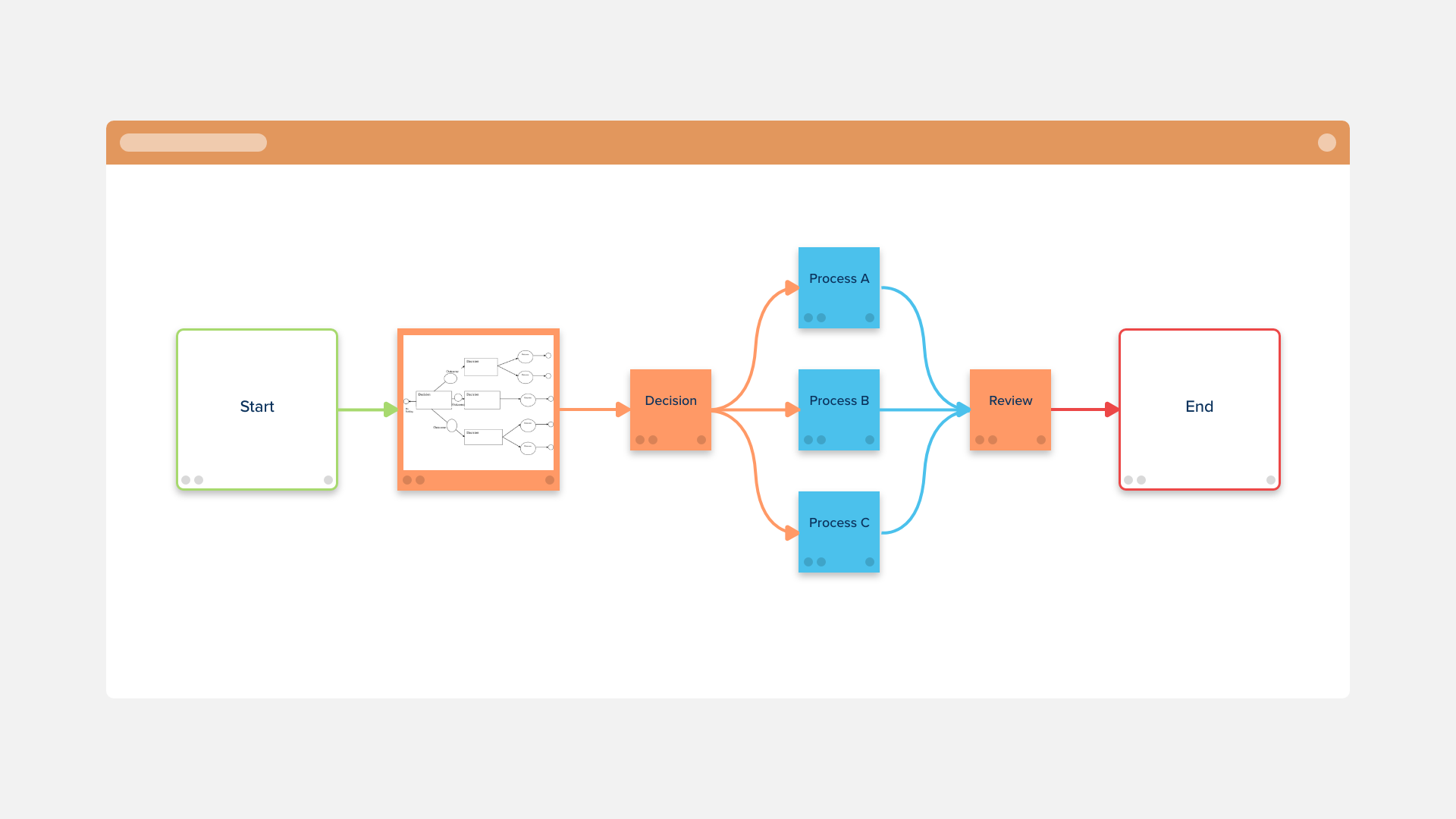
The Flowchart Template is a quick and effective way to visually represent each step in a process.

The SOAR Analysis Template will help you and your team work together to recognize the potential of your organization and create a shared vision of your future.

The Three Step Framework for Solving Problems Template is a great way to get to the core of what any problem means to you or your company and how to best address it.

Evaluate your priorities, add everything that is on your current and future to-do list, and plot each item on the matrix depending on whether it requires high effort, low effort, creates a high impact, or is low impact with the Impact vs. Effort Matrix Template.

The SCAMPER method helps you generate ideas for new products and services by encouraging you to ask seven different types of questions, which will help you understand how you can innovate and improve existing products, services, problems and ideas.

The Platform Business Model Canvas makes it easier than ever to design a platform from every stakeholder's perspective. It works very well with other templates like Stakeholder Maps, Value Proposition Design Canvases, Business Model Canvas and Lean Canvas.
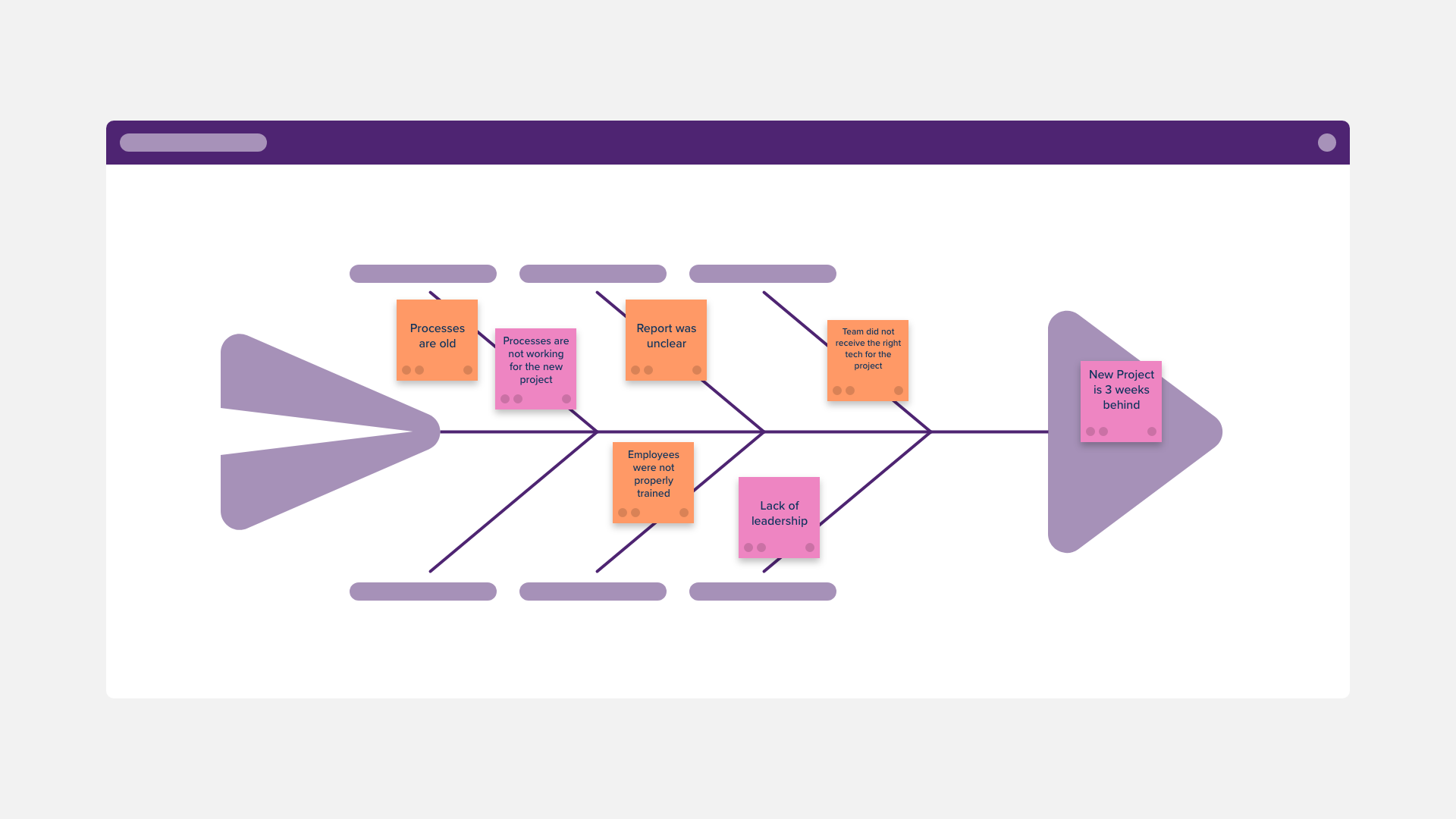
The Fishbone Diagram Template (or Ishikawa Cause & Effect Diagram,) is a used as a retrospective or a visual way to categorize the potential causes of a problem in order to identify its root cause.

This template is the final Step and last template in the 8 Steps to Problem Solving methodology, designed to question and evaluate success and next steps

Step 7 of the 8 Steps to Problem Solving: See Countermeasures Through. This template is all about evaluation and vision.

This template is Step 6 of the 8 Steps to Problem Solving: See Countermeasures Through. Use this template to create a report, develop a consulting matrix, and create a 360-degree communication process

This template is Step 5 of the 8 Steps to Problem Solving developed by Toyota Motor Corporation.
Use this template to brainstorm countermeasures, narrow the criteria matrix, and create an implementation plan

Step 4 of the 8 Steps to Problem Solving is about attempting to investigate/verify the root cause, establish cause and effect, and ask why the root cause exists.
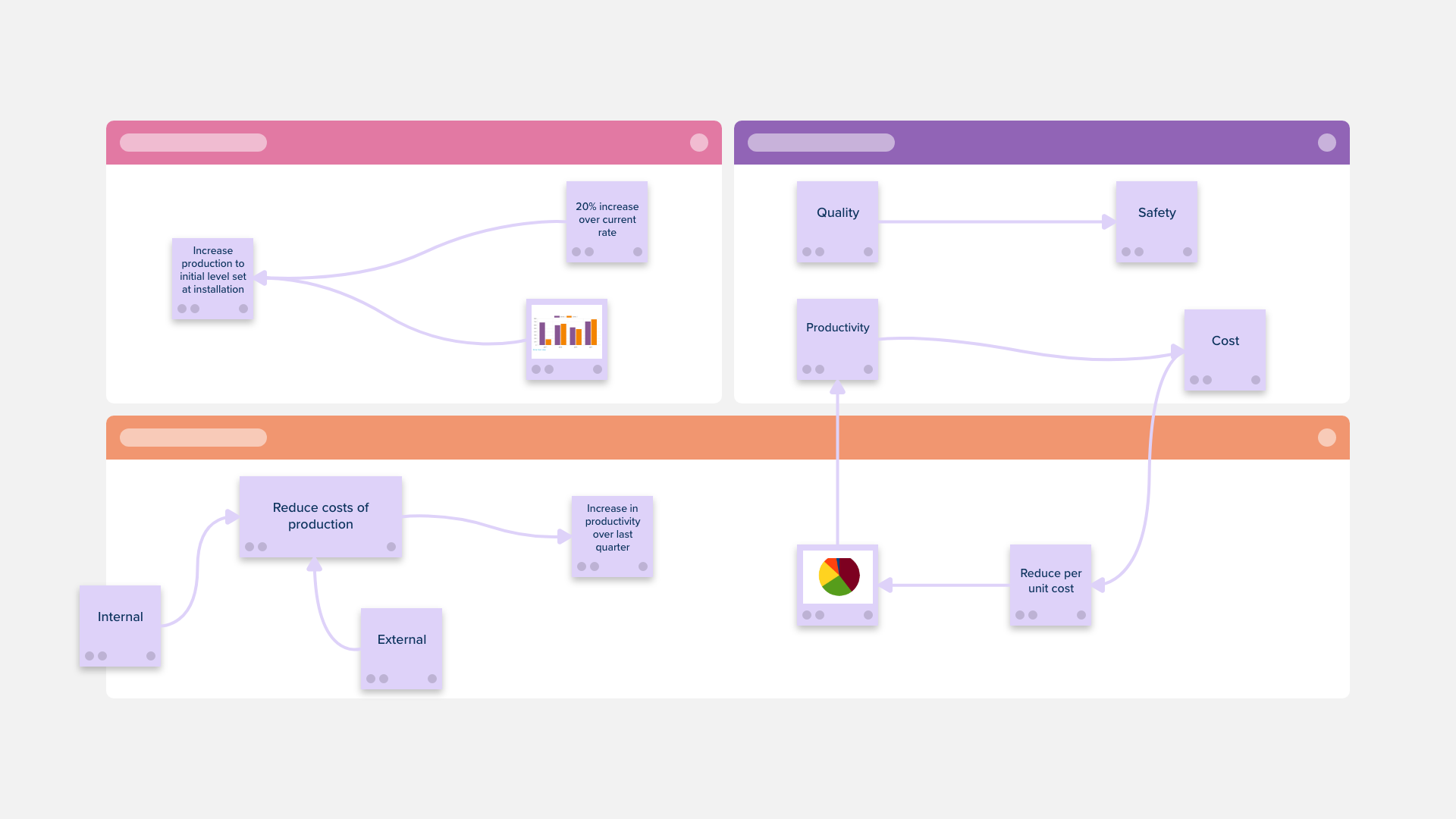
Step 3 of the of the 8 Steps to Problem Solving framework is about target setting and determining when to set the point of occurrence.
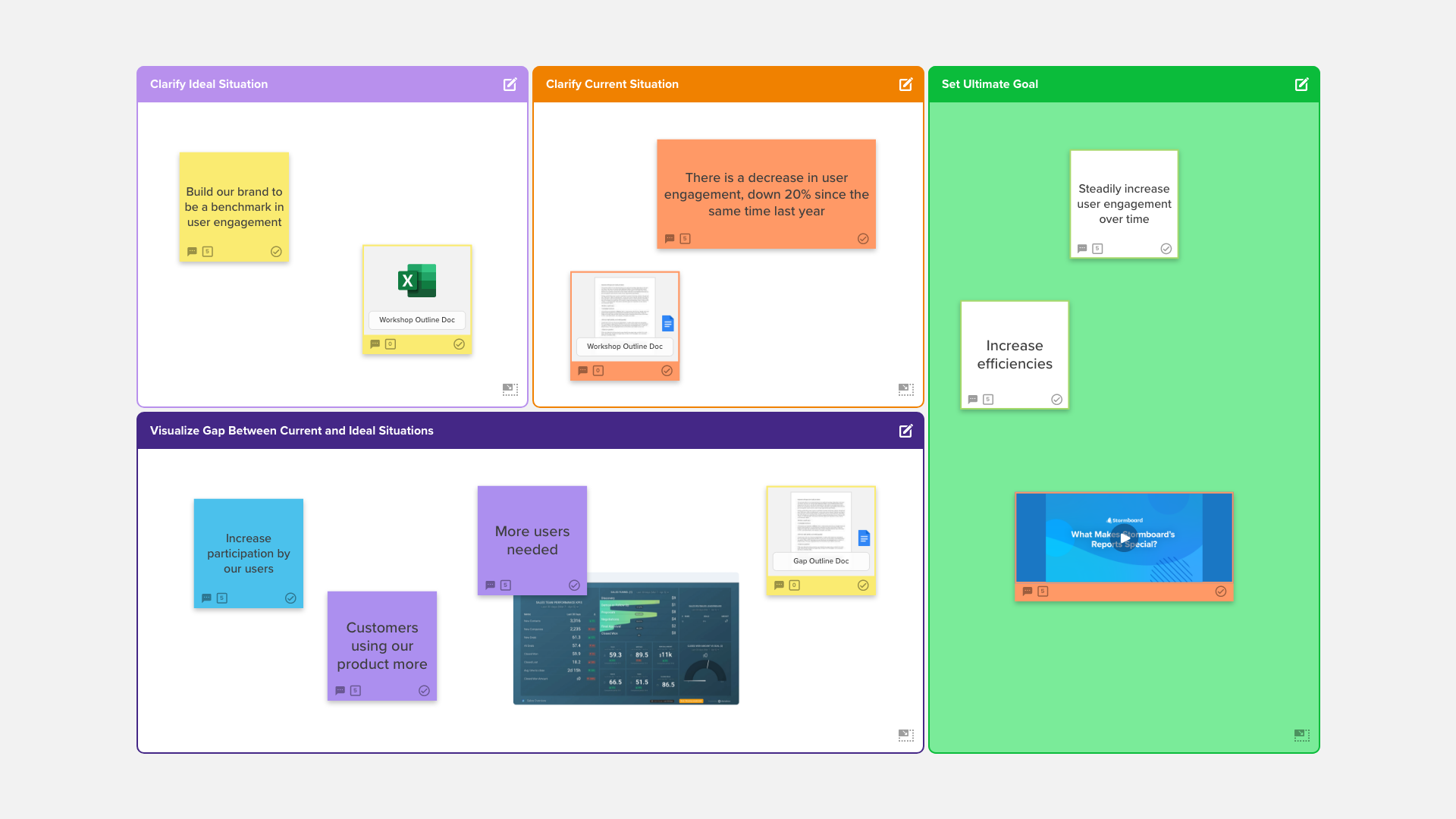
Step 1 of the of the 8 Steps to Problem Solving framework is about Clarifying the Problem and gaining holistic insight into the situation you are analyzing or problem you are trying to solve.

You can use the Abstraction Laddering Template to make sure you are solving the right problem the right way. Starting from a pre-defined problem statement, move up the ladder to expand the scope of your problem, or down the ladder to develop more concrete solutions.

You can use this template to prioritize your best ideas; perform a risk assessment; compare and analyse the strengths, weaknesses, opportunities, and threats.

This template is ideal if you are looking for a way to create an actionable, entrepreneur-focused business plan, as it focuses on problems, solutions, key metrics, and key advantages.

Based on the thinking process in M. Goldratt's theory of constraints, this template uses five sections to enable focused improvement, and breakthrough solutions by identifying, challenging, and correcting previous assumptions.

The Value vs. Effort Matrix Template contains a large section where you can add all of your ideas in preparation for adding them to the matrix. You can then plot each item on the matrix based on whether is of high value, low value, high effort, or low effort.

The Utility vs. Complexity Matrix Template contains a large section where you can add all of your ideas in preparation for adding them to the matrix.

The Urgent vs. Important Matrix Template contains a large section where you can add all of your ideas, tasks, and assignments.

Created by Edward de Bono, the Six (6) Thinking Hats approach helps you look at your decision making or product planning process from a range of different perspectives.

The Short-term and Long-term Goal Setting Template is the perfect way to set high-level goals for your company, track the productivity of a product, or brainstorm benchmarks for the upcoming year with your team.

The Logo Analysis Matrix Template contains a large section where you can add all of your ideas, examples, and inspirations. You can then plot each item on the matrix based on whether is fun, professional, iconic, or literal.

The goal of using the Lean 5S Template is to improve workplace efficiency and increase the value of products or services for customers.

The Five Why’s Template is used to explore the cause-and-effect relationships that underlie a specific problem. The primary goal of using this template is to determine the root cause of a problem by asking the questions “Why?” five times. Each answer forms the basis of the next question, until you drill down to the ultimate cause.