

About the Abstraction Laddering Template
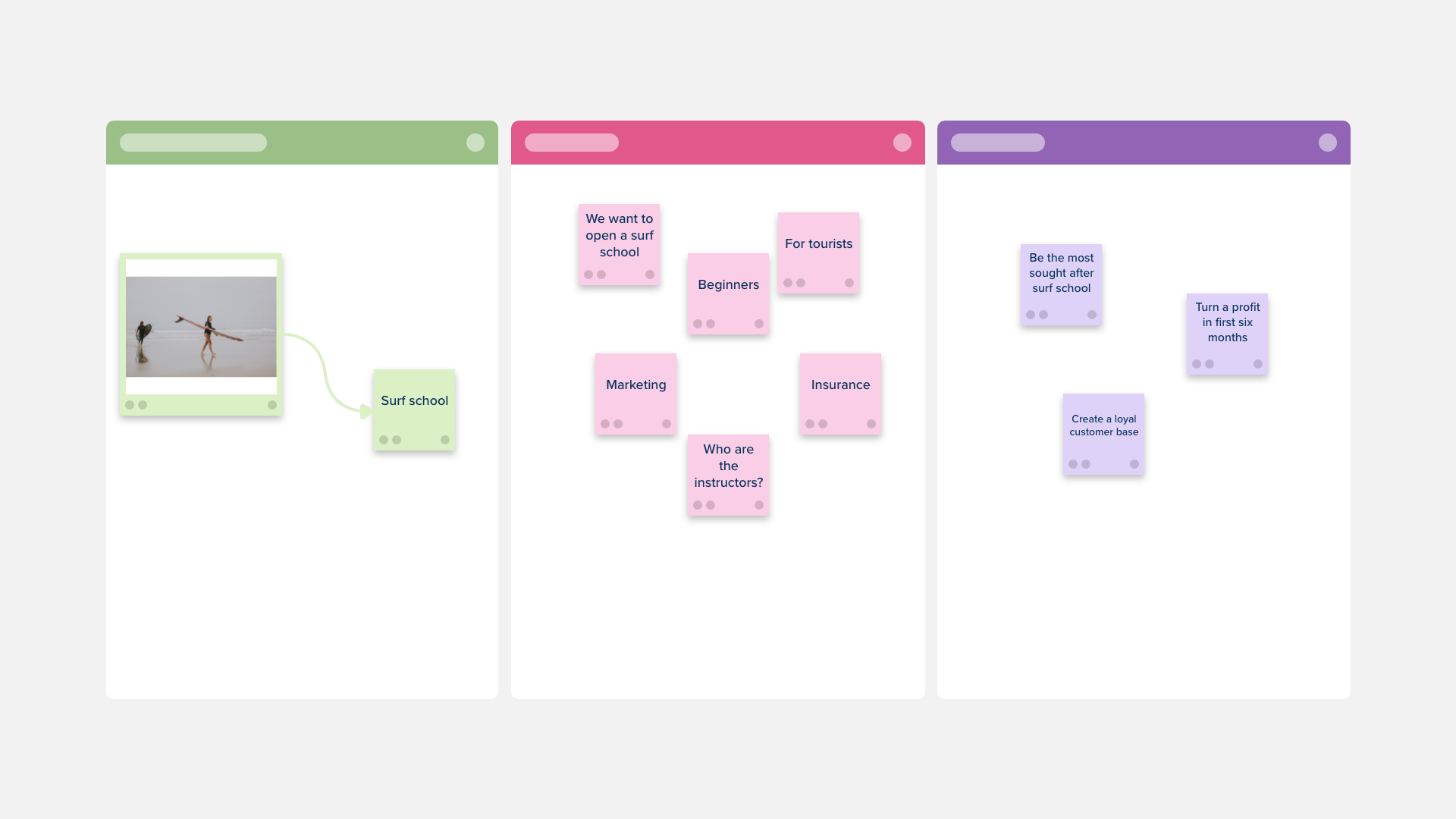
Based on a framework developed by American linguist S. I. Hayakawa and introduced in his 1939 book Language in Thought and Action. You can use the Abstraction Laddering Template to make sure you are solving the right problem the right way. Starting from a pre-defined problem statement, move up the ladder to expand the scope of your problem, or down the ladder to develop more concrete solutions.
The template has three sections: an area for your initial Problem Statement, a Why Ladder, and a How Ladde
Related Templates

The Stormboard 5-Act Beat Board Template is tailored for writers who prefer a structured approach to storytelling. Ideal for Plotters, this digital template offers a blank canvas to map out your story in a visual, organized manner. Add, move, and delete scenes with ease, ensuring that no idea is ever lost. Collaborate in real-time with editors and peers, making the creative process seamless and interactive.

This Save the Cat Beat Board Template is designed for writers looking to visually map out their story using Blake Snyder's renowned 3-act beat structure. Perfect for brainstorming, organizing, and refining your screenplay, novel, or any storytelling project, this template offers flexibility to add, delete, and rearrange scenes without losing any ideas. Collaborate seamlessly with editors and peers in real-time, ensuring that your creative process remains dynamic and productive.
Plan your approach to making a decision to improve outcomes and predictability. Outline factors involved, details, and possible roadblocks on the template.

This template allows teams and users to stop and reflect on an ongoing (or failed) project or process, strategize on improvement, and re-start with better insight and planning.

The Mind Mapping Template will help you visually structure your thoughts during a brainstorming session.

A 2 section Stormboard template consisting of large, blank section and a grid, useful for brainstorming and categorizing Risk Factors of a project, and organizing them by any chosen metrics for each axis (like potential, likelihood, impact, etc.)