
Thinking Process (Theory of Constraints)
Description
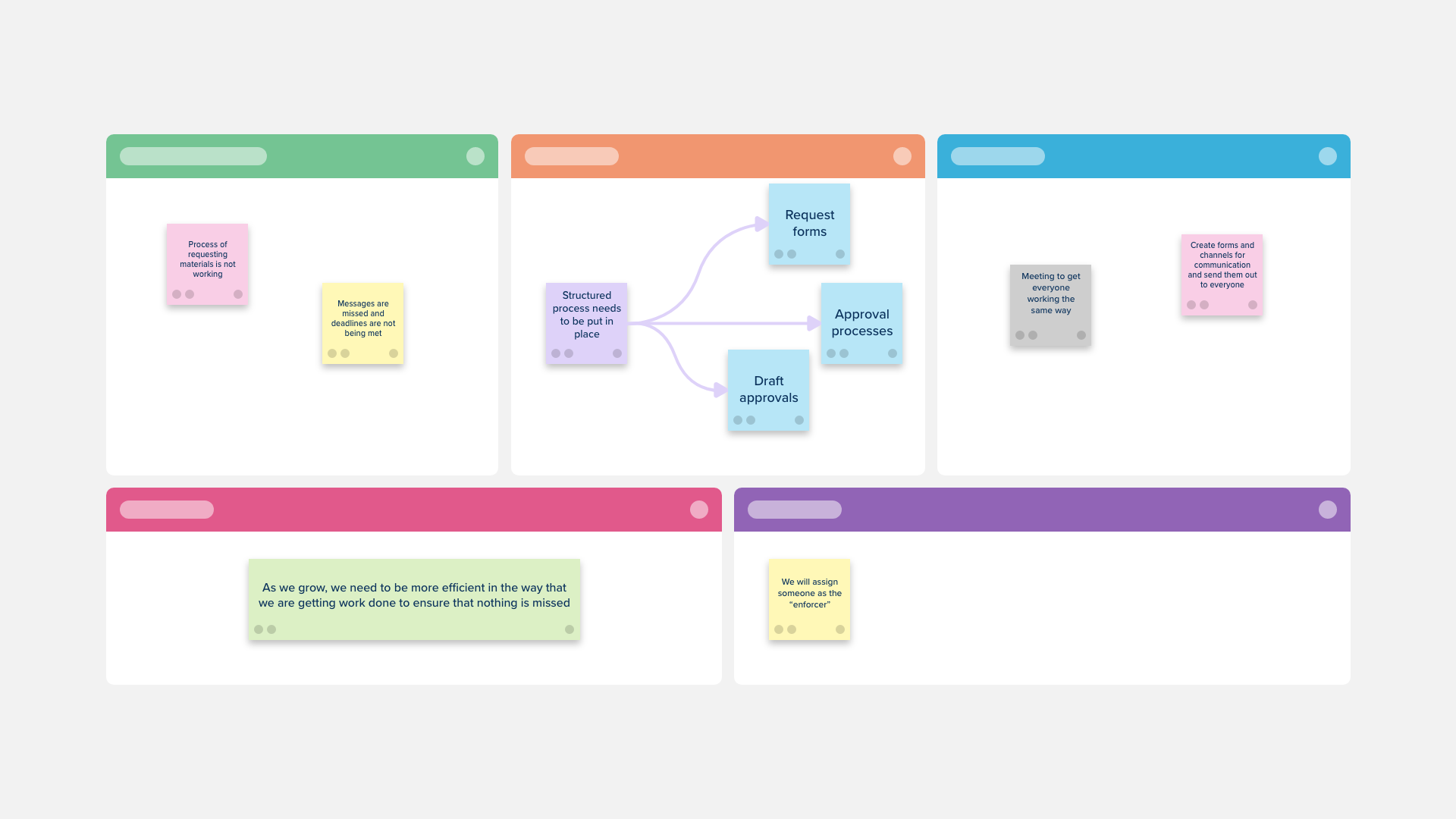
Based on the thinking process in M. Goldratt's theory of constraints, this template uses five sections to enable focused improvement, and breakthrough solutions by identifying, challenging, and correcting previous assumptions.
The Thinking Process Template’s sections ask you to identify what to change, what to change into, how to cause the change, why change, and how to maintain the process of ongoing improvement.
Learn more about how to use this process in our article Theory of Constraints: Your Guide to Stormboard’s Thinking Process Template
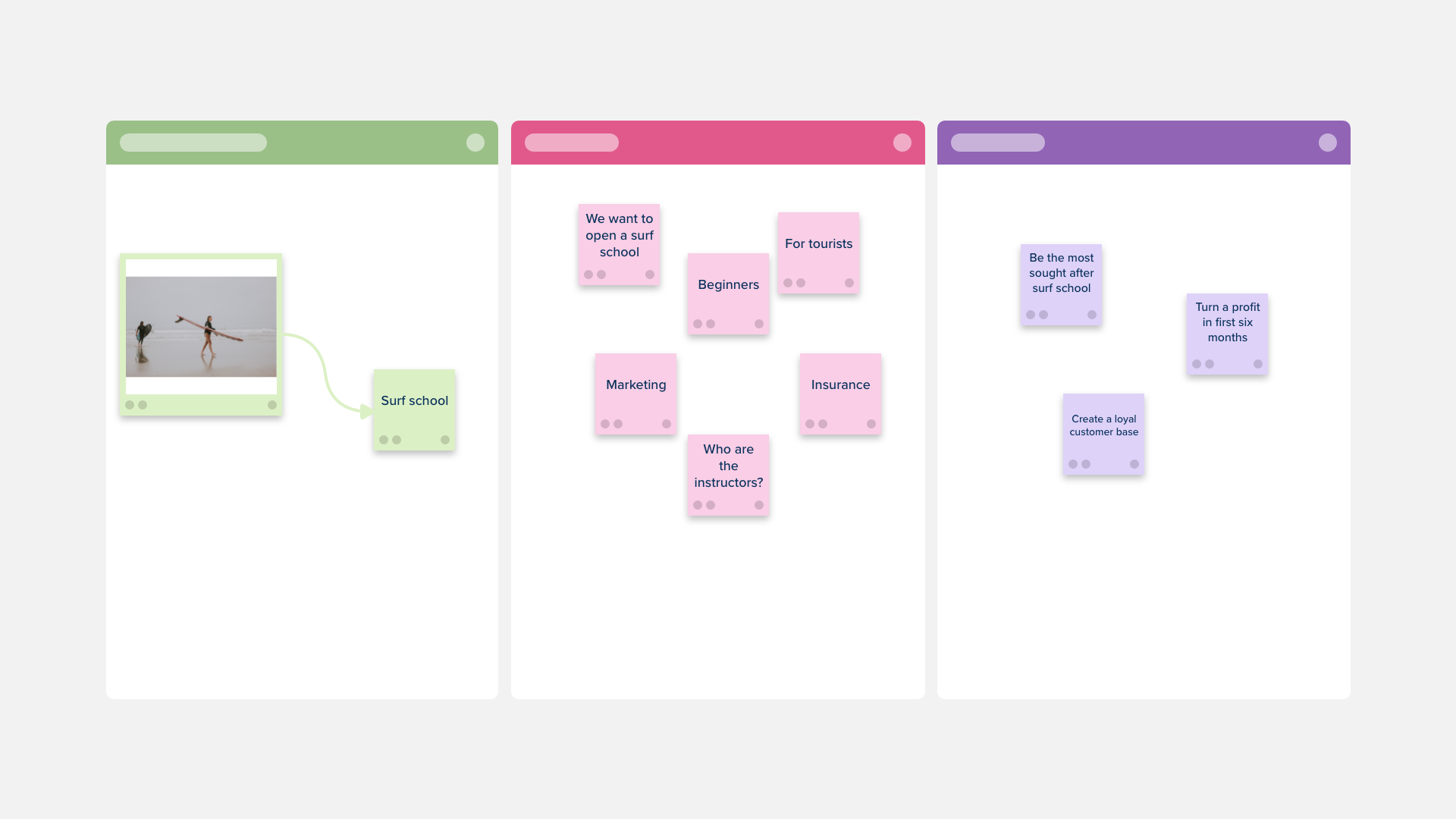
Plan your approach to making a decision to improve outcomes and predictability. Outline factors involved, details, and possible roadblocks on the template.

This template allows teams and users to stop and reflect on an ongoing (or failed) project or process, strategize on improvement, and re-start with better insight and planning.

The Problem Statement Template will let your design team craft an actionable need from your users that will address a current gap in your product or service.

The Empathy Interview Template is a great way to gain insight into what is important to users, and how they feel about your product or service.
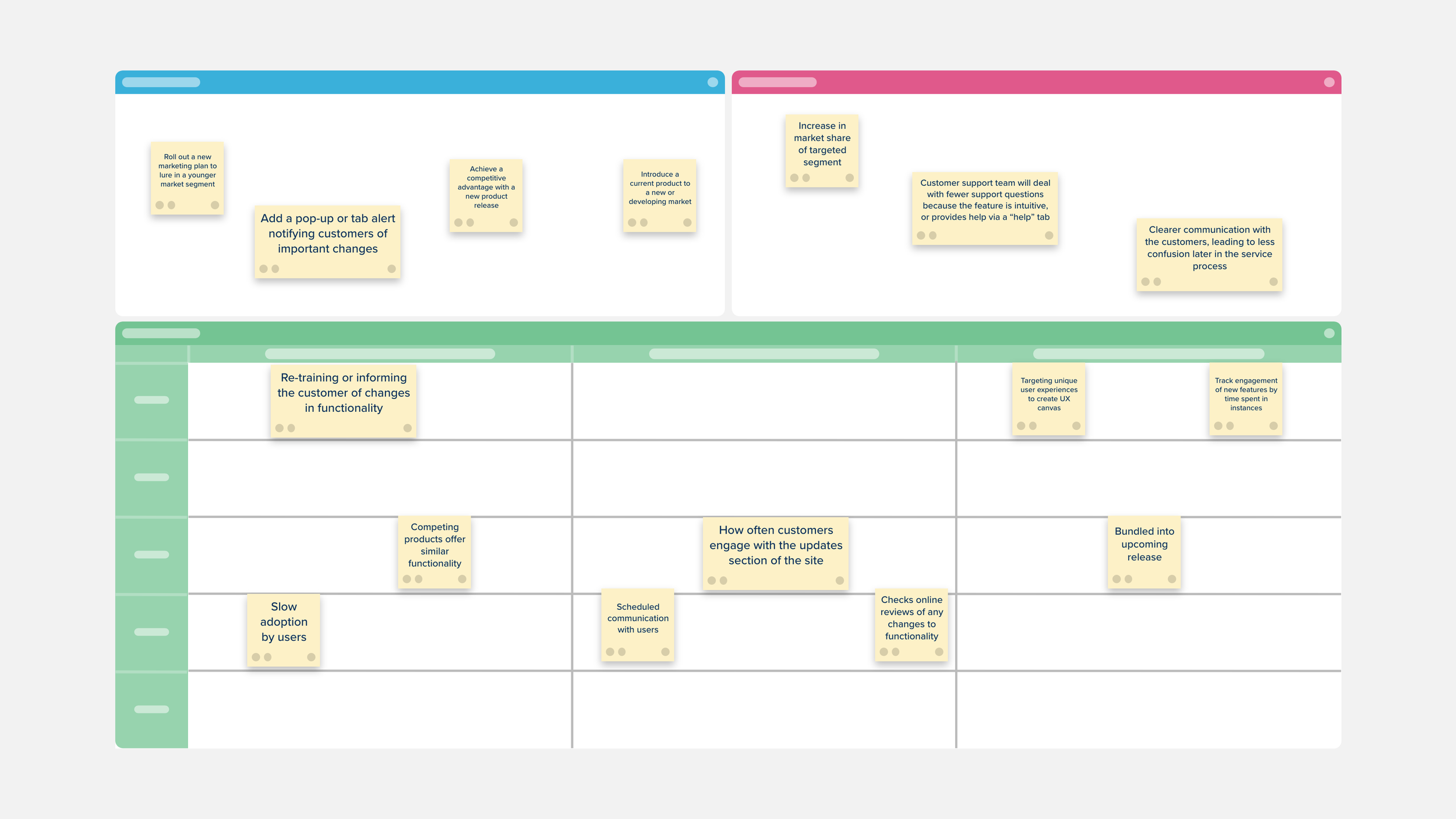
The Customer Voice Canvas is a space to challenge the conventional knowledge of customer engagement and take a more strategic and targeted approach to customer feedback.

Separate your findings into primary and secondary sources.

Use the Design Project Management Template to stay on top of your workflow by prioritizing and tracking your design work and keeping your team focused on the progress and timeline of their design tasks.

The Customer Perceptual Map Template creates a visual representation of how your customers perceive your company and your competitors.
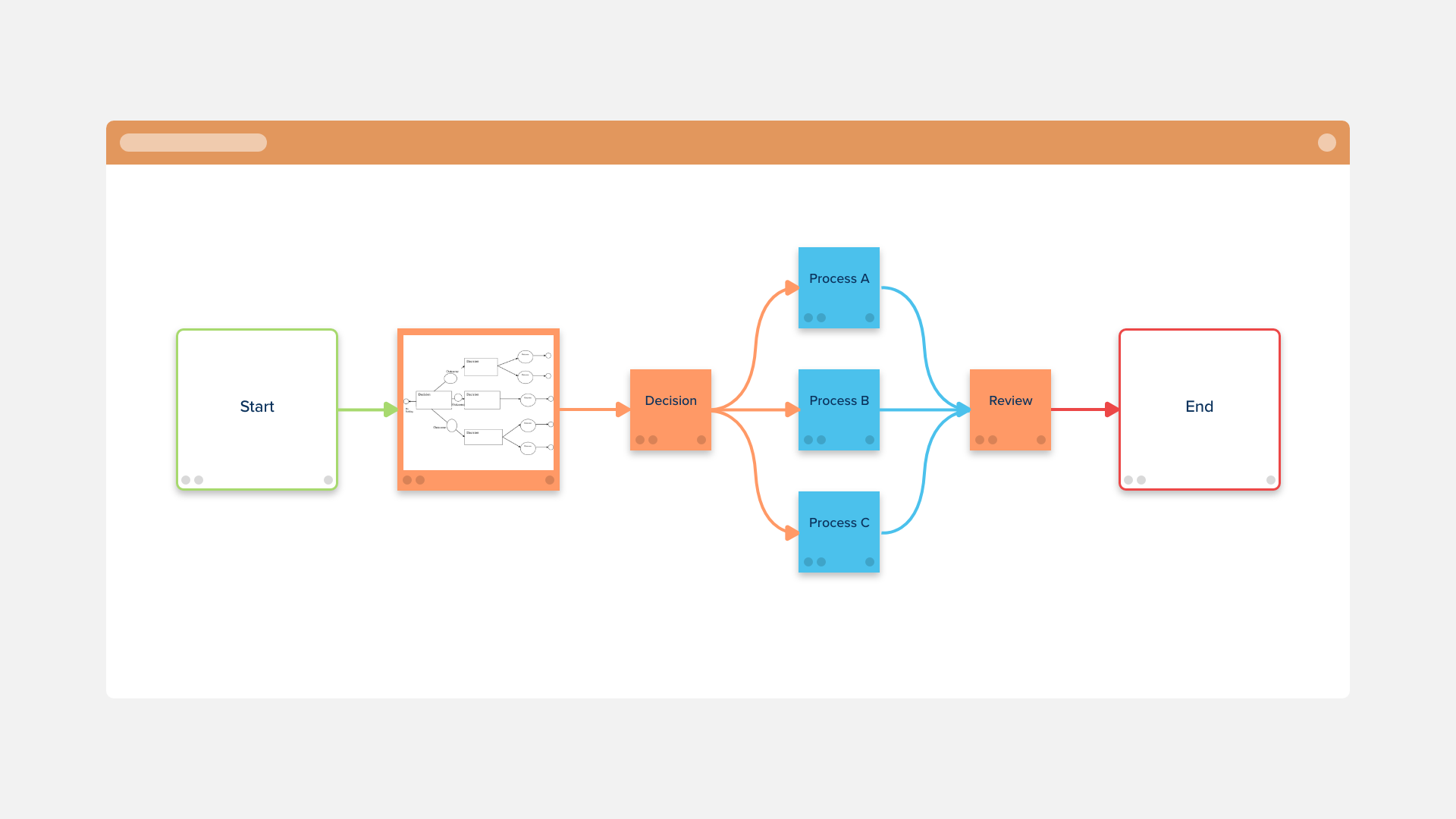
The Flowchart Template is a quick and effective way to visually represent each step in a process.

The Brand Identity Template is the best way to review your branding and plan for an update or overhaul.

The SOAR Analysis Template will help you and your team work together to recognize the potential of your organization and create a shared vision of your future.

UX User Interviews help design and product teams discover what drives your users toward your product and find better ways to serve them.

Visualize all of the places, or touchpoints, that your customer comes in contact with your company, product, or service both online and off with the Customer Journey Map Template.

The Three Step Framework for Solving Problems Template is a great way to get to the core of what any problem means to you or your company and how to best address it.

The Scenario Mapping Template can be used to better understand your user’s process and help identify areas that you can improve.
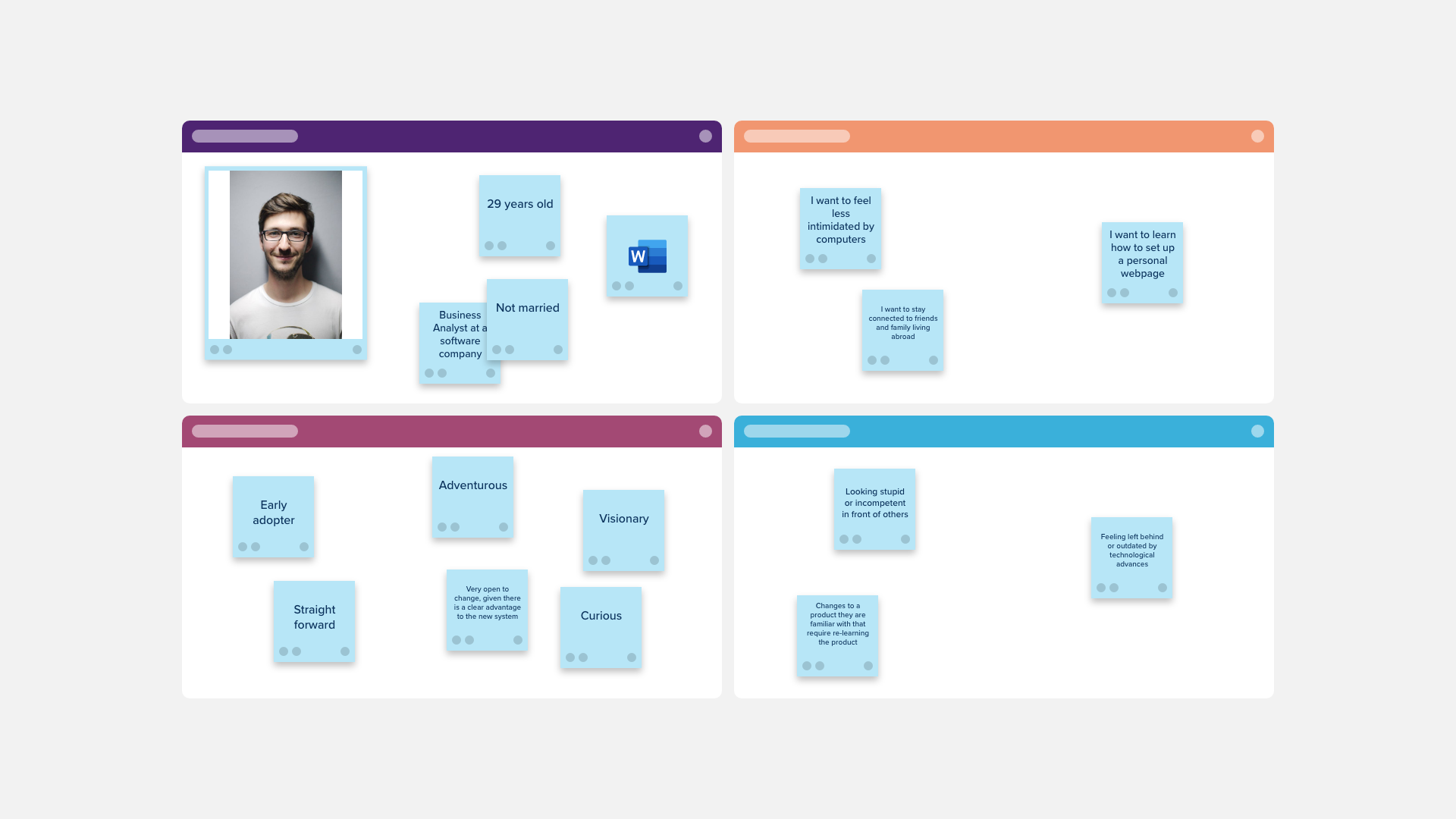
Use the User Persona Matrix to create a detailed description of your customer and learn more about who they are.

Use the User Persona Profile Template to create a detailed description of your ideal customer and learn more about who they are.

The SCAMPER method helps you generate ideas for new products and services by encouraging you to ask seven different types of questions, which will help you understand how you can innovate and improve existing products, services, problems and ideas.
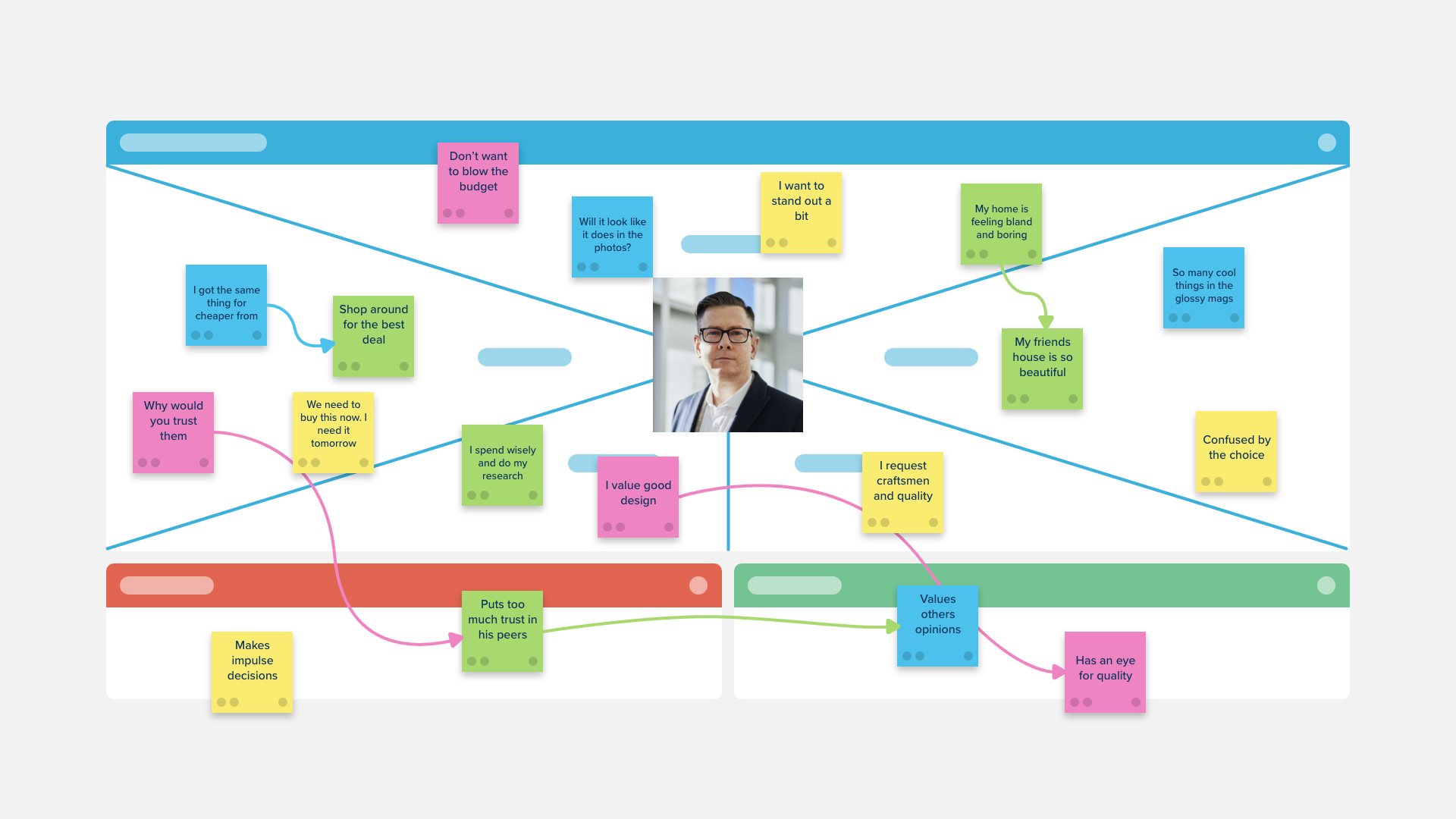
A template purpose-built for male customer and prospects segments, the Stormboard empathy map is a collaborative tool teams can use to gain a deeper insight into their customers.

An empathy map is a collaborative tool teams can use to gain a deeper insight into their customers. Purpose-built for female customer and prospects segments.

The Platform Business Model Canvas makes it easier than ever to design a platform from every stakeholder's perspective. It works very well with other templates like Stakeholder Maps, Value Proposition Design Canvases, Business Model Canvas and Lean Canvas.
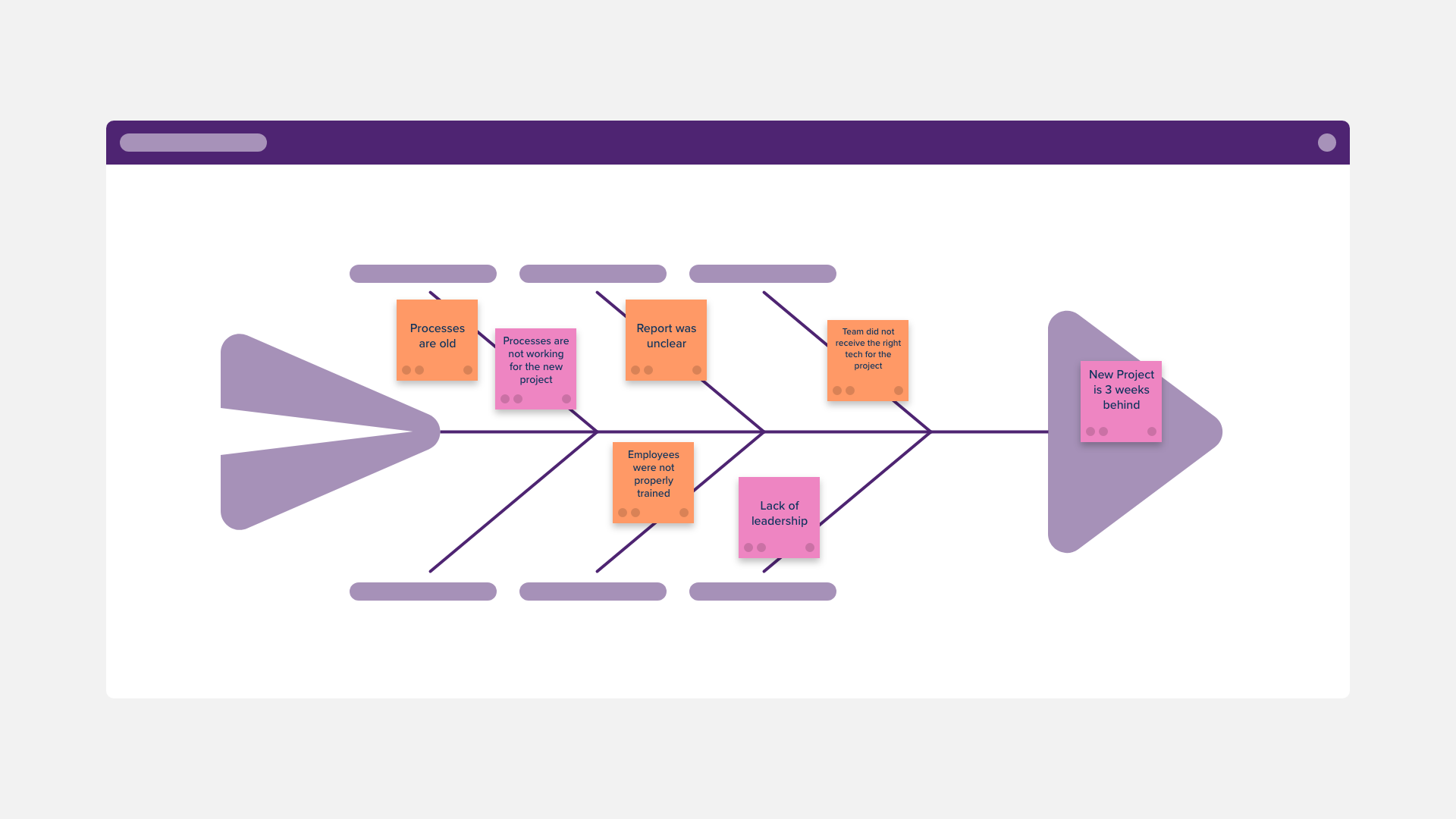
The Fishbone Diagram Template (or Ishikawa Cause & Effect Diagram,) is a used as a retrospective or a visual way to categorize the potential causes of a problem in order to identify its root cause.

This template is the final Step and last template in the 8 Steps to Problem Solving methodology, designed to question and evaluate success and next steps

Step 7 of the 8 Steps to Problem Solving: See Countermeasures Through. This template is all about evaluation and vision.

This template is Step 6 of the 8 Steps to Problem Solving: See Countermeasures Through. Use this template to create a report, develop a consulting matrix, and create a 360-degree communication process

This template is Step 5 of the 8 Steps to Problem Solving developed by Toyota Motor Corporation.
Use this template to brainstorm countermeasures, narrow the criteria matrix, and create an implementation plan

Step 4 of the 8 Steps to Problem Solving is about attempting to investigate/verify the root cause, establish cause and effect, and ask why the root cause exists.
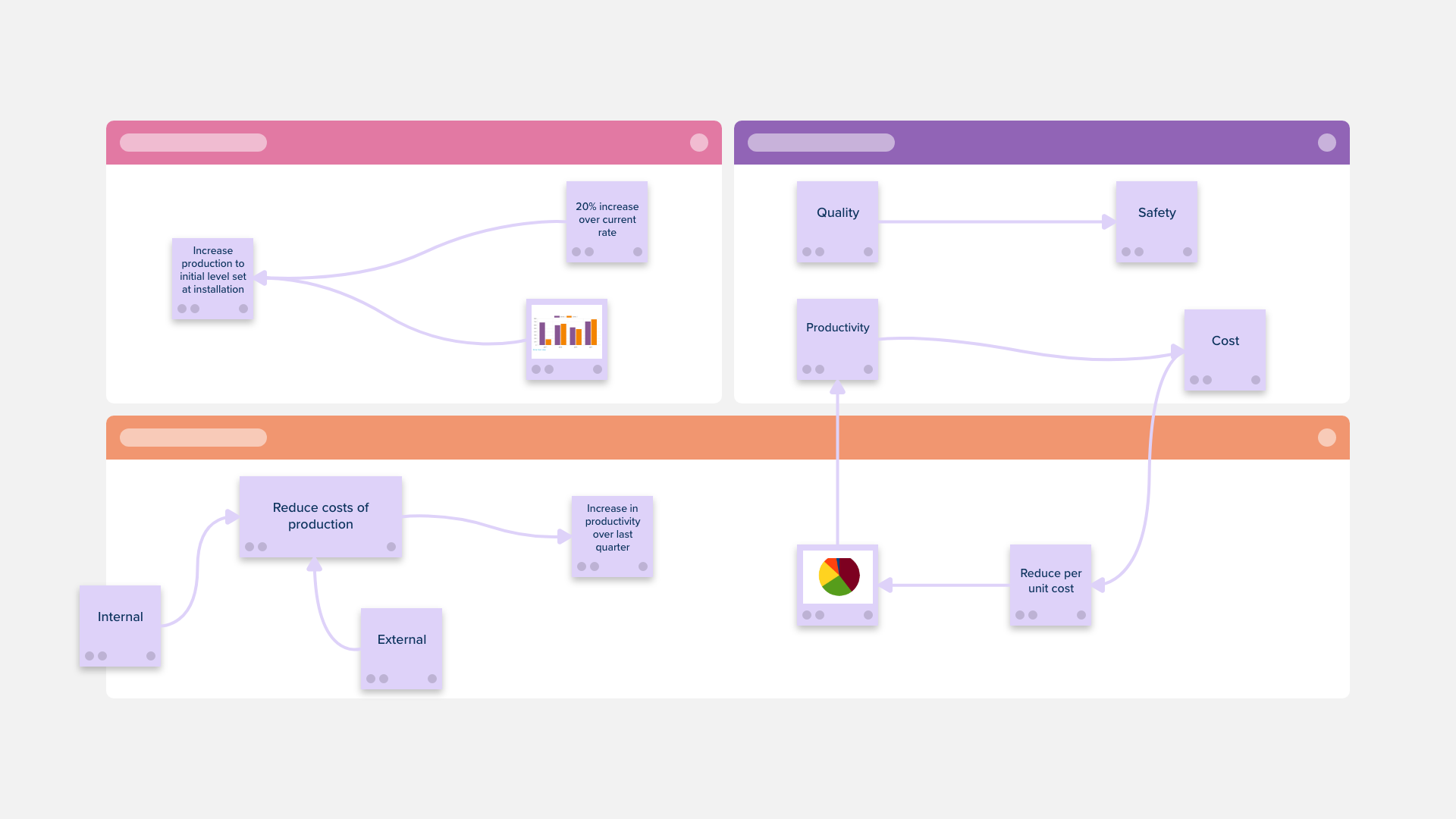
Step 3 of the of the 8 Steps to Problem Solving framework is about target setting and determining when to set the point of occurrence.
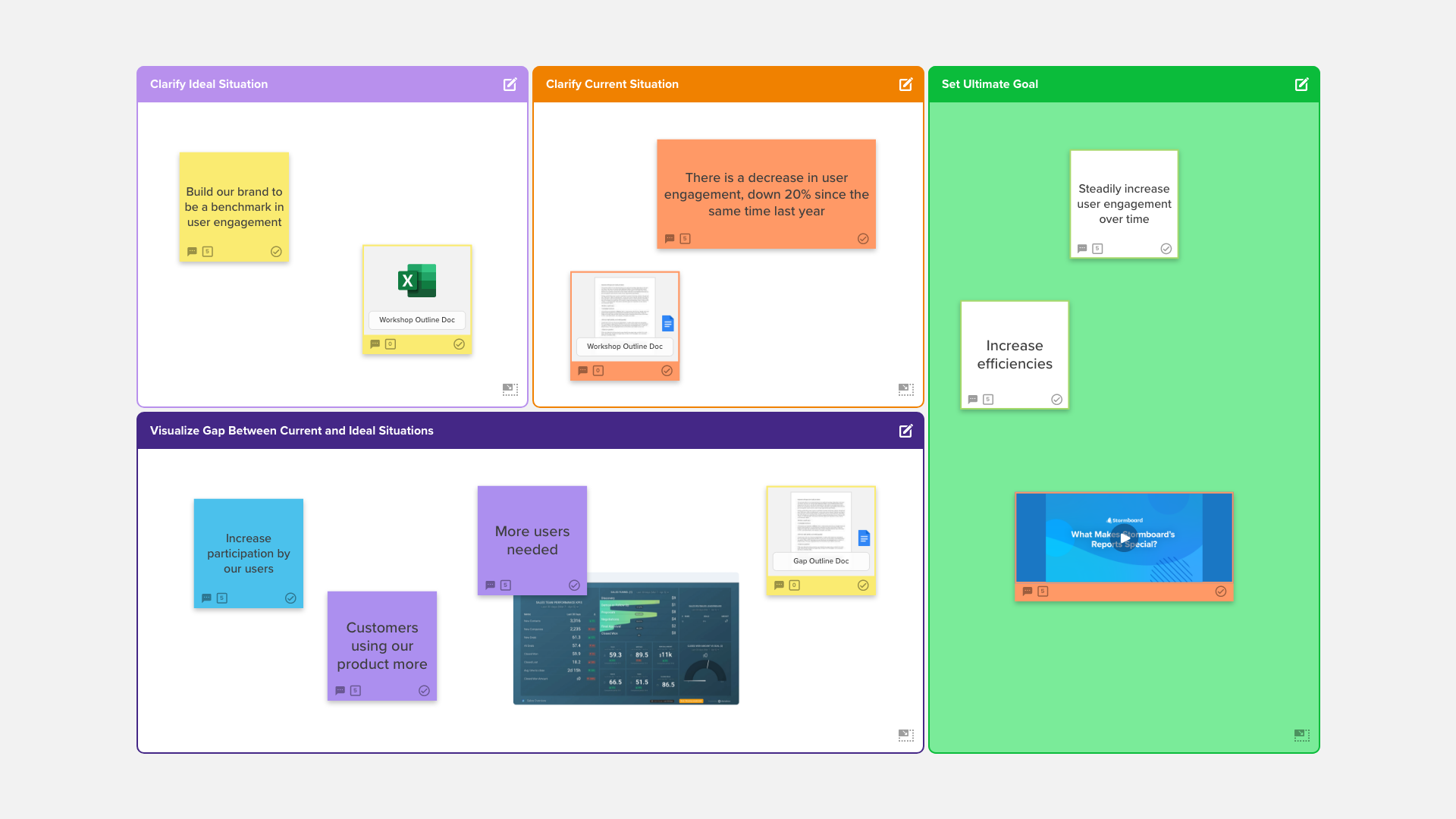
Step 1 of the of the 8 Steps to Problem Solving framework is about Clarifying the Problem and gaining holistic insight into the situation you are analyzing or problem you are trying to solve.

The I Like, I Wish, I Wonder Retrospective Template is a great design thinking tool for your team to use after a sprint, planning for a prototype, or completion of a project.