
Six Thinking Hats

Description
Created by Edward de Bono, the Six (6) Thinking Hats approach helps you look at your decision making or product planning process from a range of different perspectives.
This color-coded template is divided into six sections. The Information section is where you list the facts that are currently available, the Emotions section is for intuitive or instinctive gut reactions or statements of emotional feeling, and the Discernment section uses logic to identify reasons to be cautious and conservative. Use the Optimistic Response section to identify benefits, the Creativity section to add statements of provocation and investigation, and finally the Overview section is for drawing conclusions.

The Stormboard 5-Act Beat Board Template is tailored for writers who prefer a structured approach to storytelling. Ideal for Plotters, this digital template offers a blank canvas to map out your story in a visual, organized manner. Add, move, and delete scenes with ease, ensuring that no idea is ever lost. Collaborate in real-time with editors and peers, making the creative process seamless and interactive.

This Save the Cat Beat Board Template is designed for writers looking to visually map out their story using Blake Snyder's renowned 3-act beat structure. Perfect for brainstorming, organizing, and refining your screenplay, novel, or any storytelling project, this template offers flexibility to add, delete, and rearrange scenes without losing any ideas. Collaborate seamlessly with editors and peers in real-time, ensuring that your creative process remains dynamic and productive.

Optimize your Agile Release Train with Stormboard’s Dependency Board Template. Track dependencies between tasks, user stories, and features to boost transparency, collaboration, and productivity. Sync with Jira, Rally, or Azure DevOps for seamless, real-time updates and drag-and-drop project management. Discover more now!
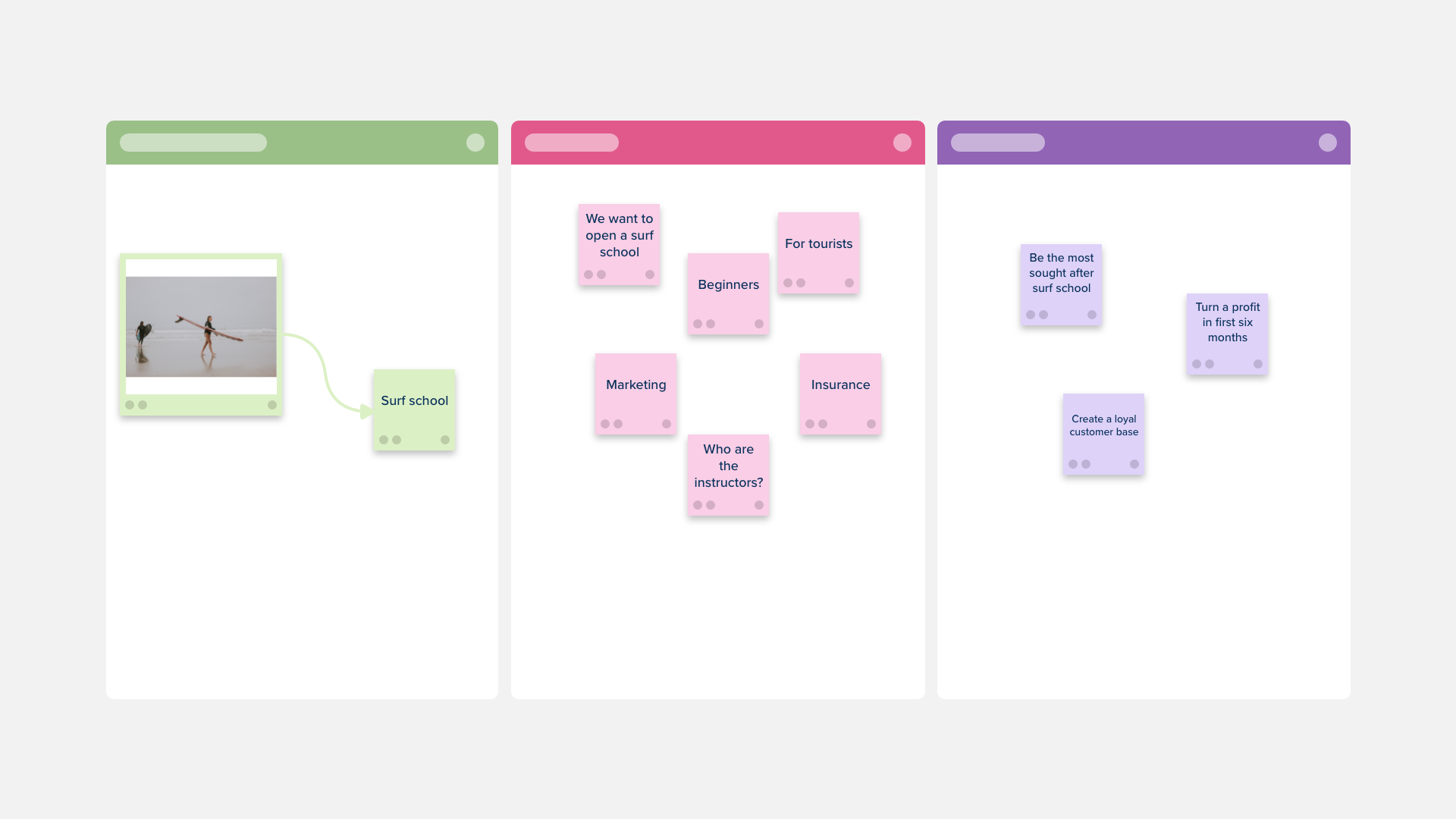
Plan your approach to making a decision to improve outcomes and predictability. Outline factors involved, details, and possible roadblocks on the template.

This template allows teams and users to stop and reflect on an ongoing (or failed) project or process, strategize on improvement, and re-start with better insight and planning.

The Mind Mapping Template will help you visually structure your thoughts during a brainstorming session.

This blank template is divided into 8 sections that you can use to structure your meeting, brainstorm, strategic planning session, project management plan, and more.

A 2 section Stormboard template consisting of large, blank section and a grid, useful for brainstorming and categorizing Risk Factors of a project, and organizing them by any chosen metrics for each axis (like potential, likelihood, impact, etc.)

The Project Kickoff Template is used to concisely create clear working agreements, a shared understanding of project success, and to help decide on your next steps.

Use the Rose, Bud, and Thorn Template to assess your project and find what’s working, what’s not working, and identify any opportunities for improvement.

Use the Affinity Diagram to rank your ideas from those having the strongest connections, or affinity, to those with the weakest.

The Concept Map Template is a great way to depict relationships between concepts to gain a deeper understanding of a topic.
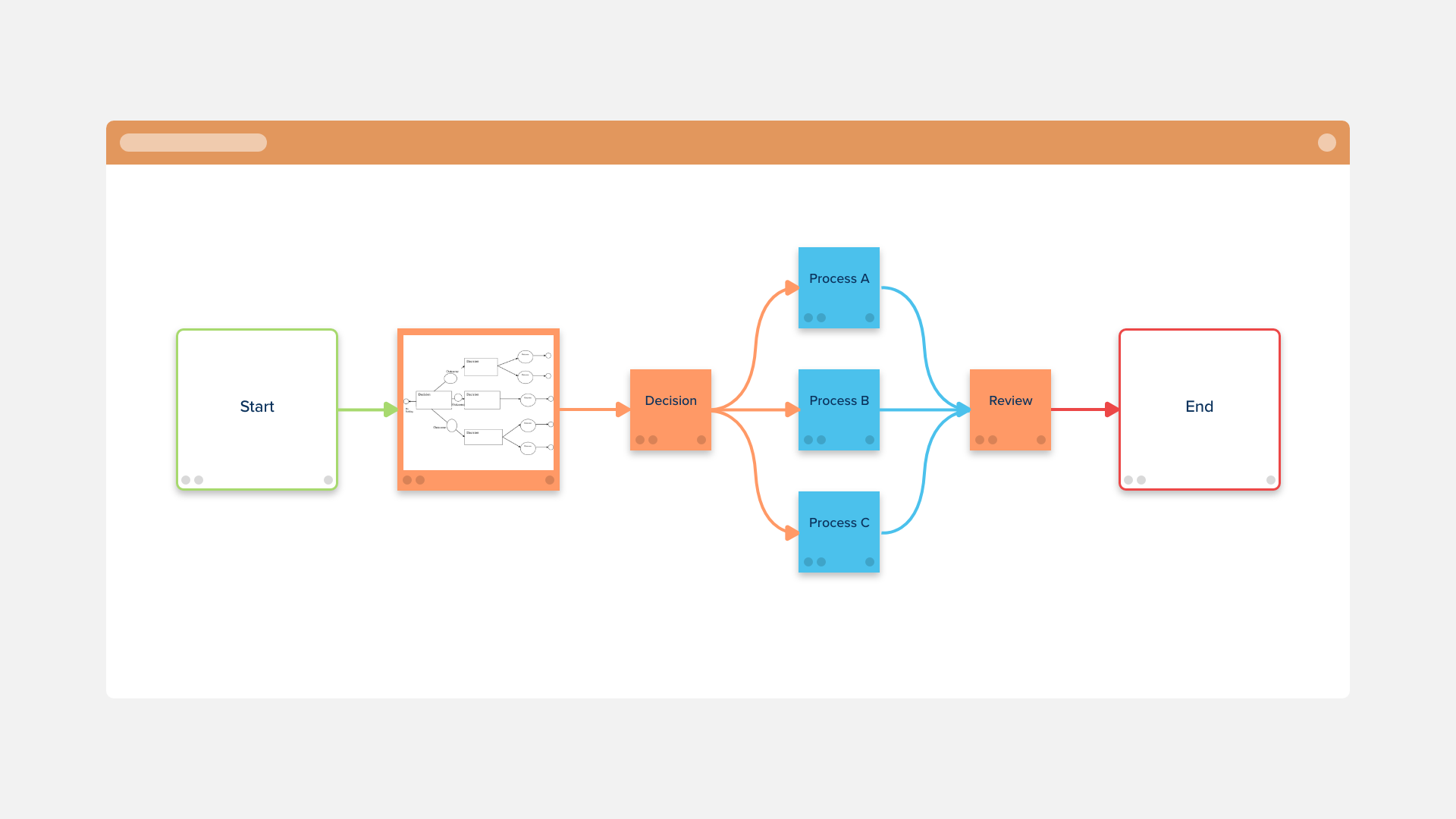
The Flowchart Template is a quick and effective way to visually represent each step in a process.

The SOAR Analysis Template will help you and your team work together to recognize the potential of your organization and create a shared vision of your future.

The Three Step Framework for Solving Problems Template is a great way to get to the core of what any problem means to you or your company and how to best address it.

Evaluate your priorities, add everything that is on your current and future to-do list, and plot each item on the matrix depending on whether it requires high effort, low effort, creates a high impact, or is low impact with the Impact vs. Effort Matrix Template.

The SCAMPER method helps you generate ideas for new products and services by encouraging you to ask seven different types of questions, which will help you understand how you can innovate and improve existing products, services, problems and ideas.

The Platform Business Model Canvas makes it easier than ever to design a platform from every stakeholder's perspective. It works very well with other templates like Stakeholder Maps, Value Proposition Design Canvases, Business Model Canvas and Lean Canvas.
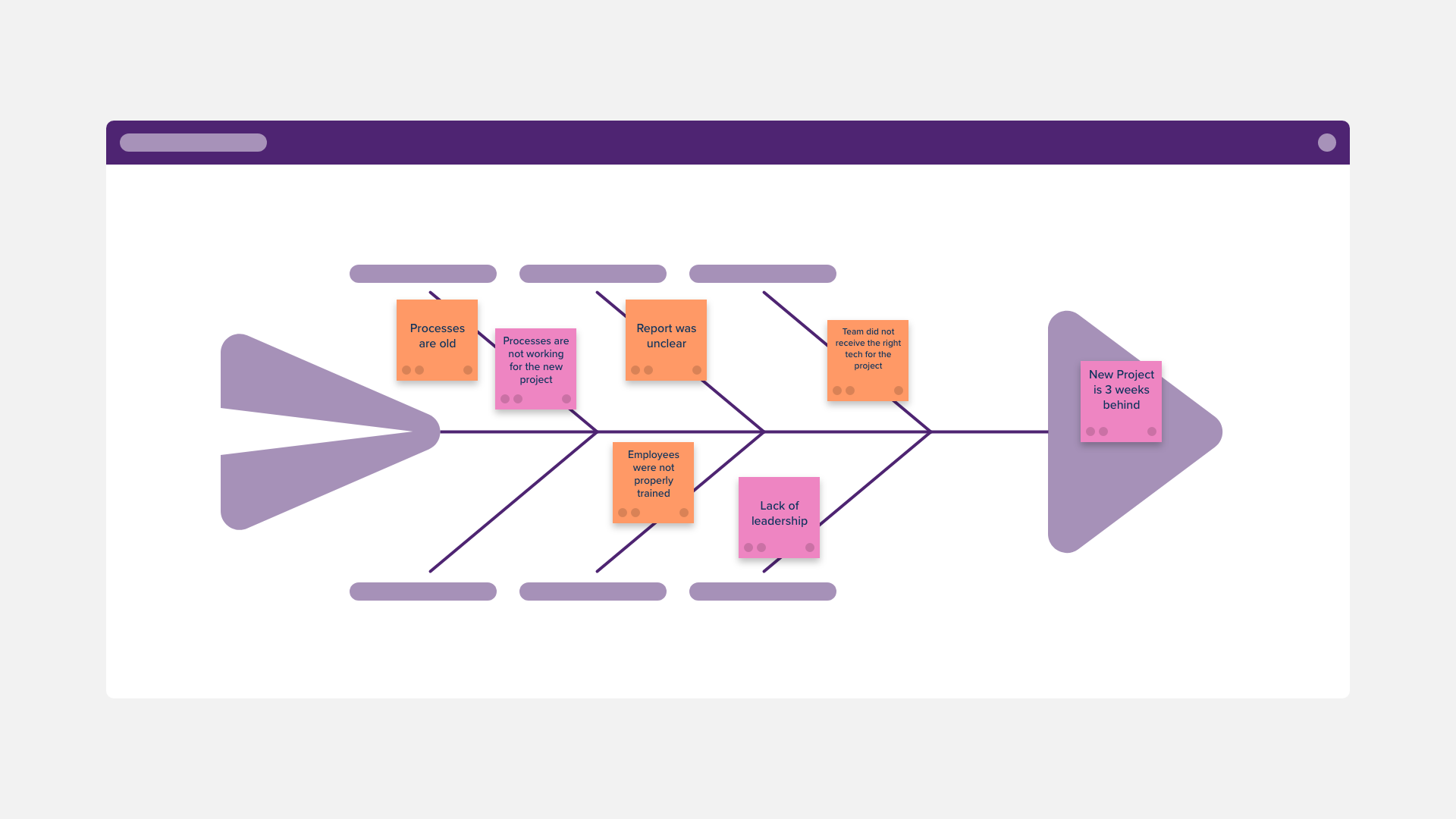
The Fishbone Diagram Template (or Ishikawa Cause & Effect Diagram,) is a used as a retrospective or a visual way to categorize the potential causes of a problem in order to identify its root cause.

Use this template to transform spontaneous insight into organized, workable solutions and then track those solutions as they develop. Your team will be able to work to identify problems and brainstorm potential solutions.

A basic two-section Stormboard template consisting of large, blank section and an adjacent grid, useful for brainstorming Assumptions about a project, product, or campaign, and organizing them by any chosen metrics (like impact, effort, difficulty etc.)

This template is the final Step and last template in the 8 Steps to Problem Solving methodology, designed to question and evaluate success and next steps

Step 7 of the 8 Steps to Problem Solving: See Countermeasures Through. This template is all about evaluation and vision.

This template is Step 6 of the 8 Steps to Problem Solving: See Countermeasures Through. Use this template to create a report, develop a consulting matrix, and create a 360-degree communication process

This template is Step 5 of the 8 Steps to Problem Solving developed by Toyota Motor Corporation.
Use this template to brainstorm countermeasures, narrow the criteria matrix, and create an implementation plan

Step 4 of the 8 Steps to Problem Solving is about attempting to investigate/verify the root cause, establish cause and effect, and ask why the root cause exists.
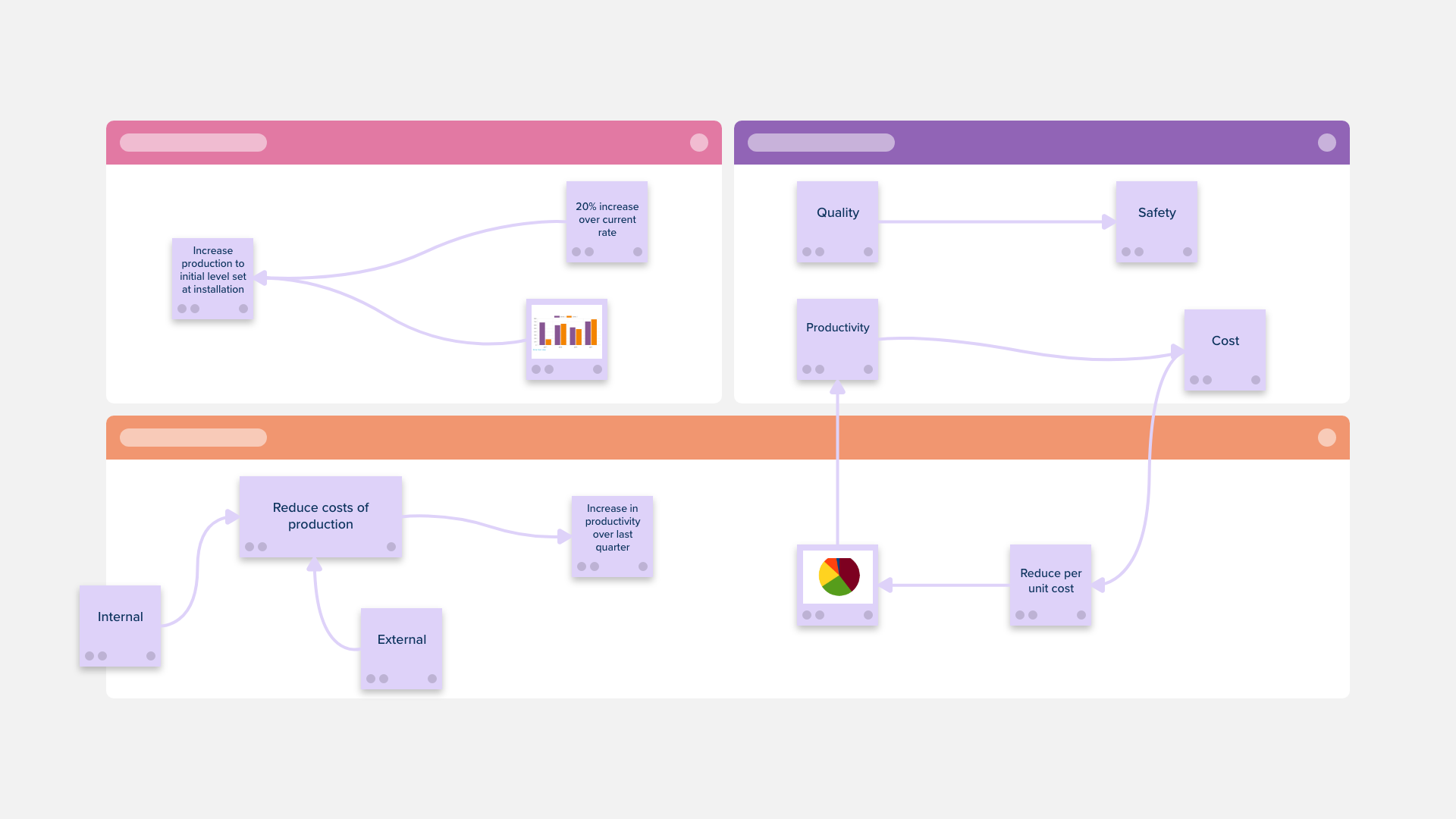
Step 3 of the of the 8 Steps to Problem Solving framework is about target setting and determining when to set the point of occurrence.
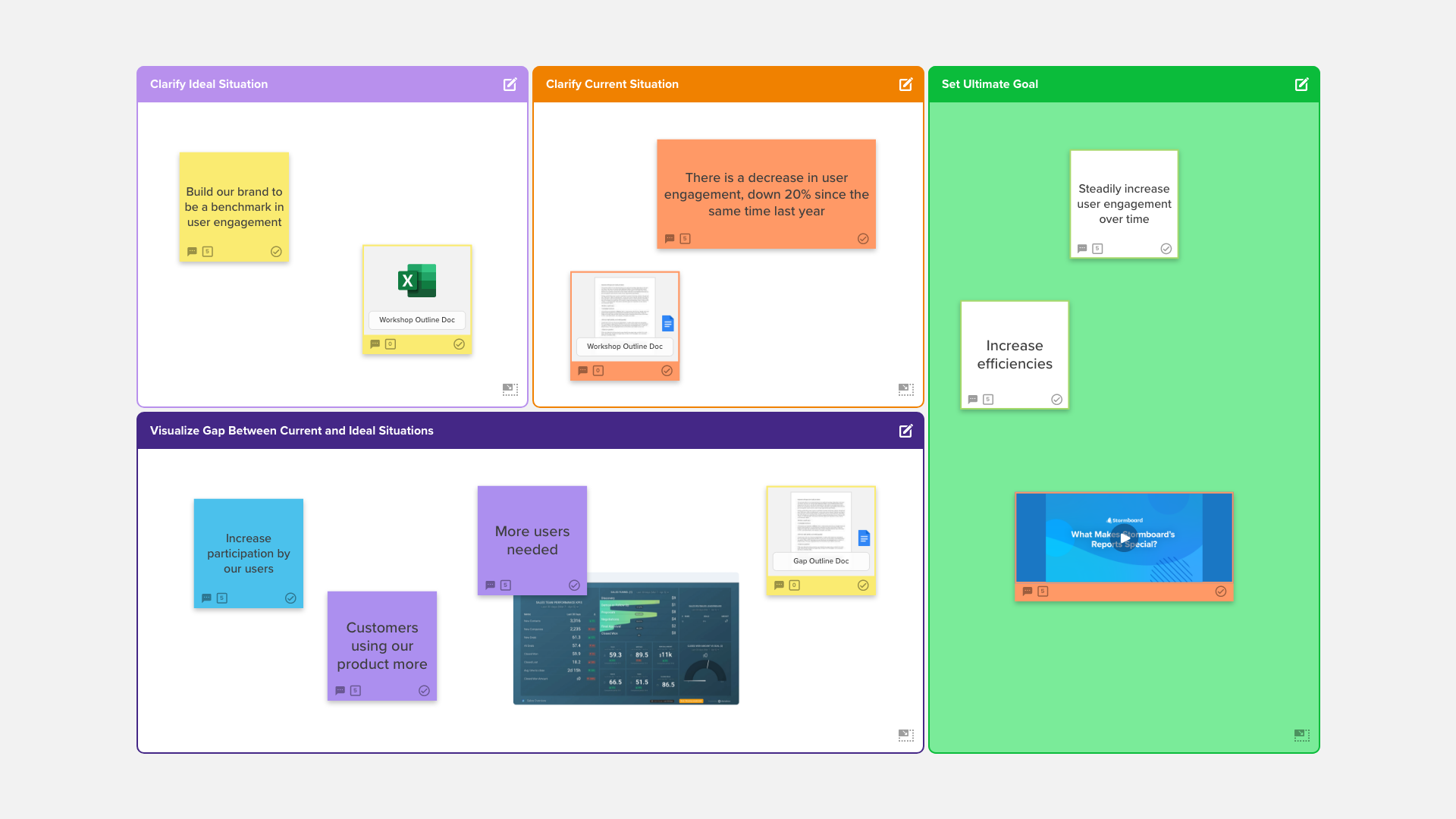
Step 1 of the of the 8 Steps to Problem Solving framework is about Clarifying the Problem and gaining holistic insight into the situation you are analyzing or problem you are trying to solve.

You can use the Abstraction Laddering Template to make sure you are solving the right problem the right way. Starting from a pre-defined problem statement, move up the ladder to expand the scope of your problem, or down the ladder to develop more concrete solutions.

This template is ideal if you are looking for a way to create an actionable, entrepreneur-focused business plan, as it focuses on problems, solutions, key metrics, and key advantages.