
Negotiation BATNA/WATNA
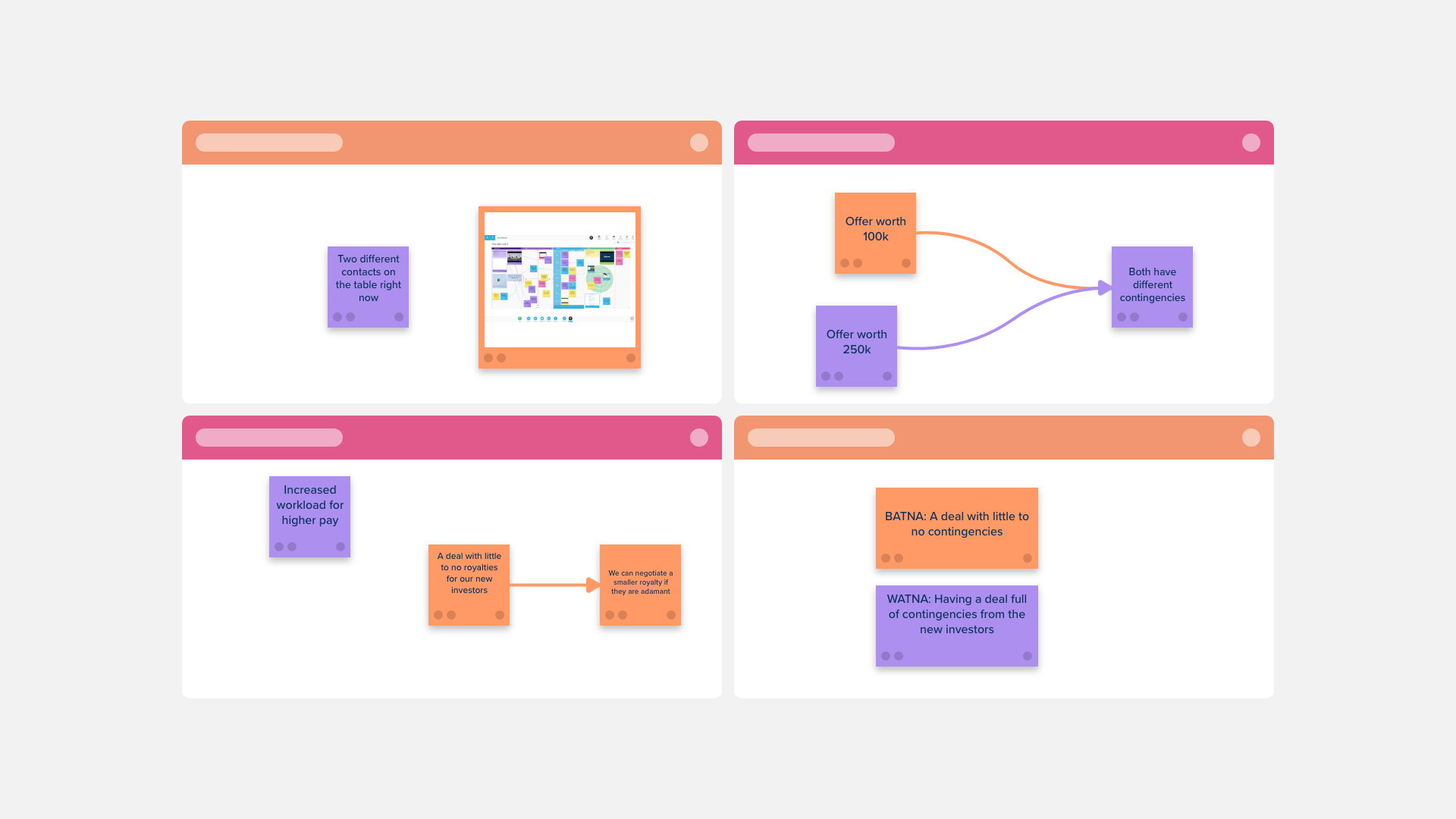
Description
The Negotiation BATNA/WATNA Template helps you figure out the best alternative to a negotiated agreement (BATNA) and the worst alternative to a negotiated agreement (WATNA). This is important to determine before going into a negotiation, because it gives you an idea of how far you are willing to go before you need to walk away.
The template is divided into four sections: Possible Solutions (options on the table), Objective Criteria, Interests (what are your deeper needs), and BATNA/WATNA.

Transform the data collected in your Customer Voice Canvas into actionable workflows.

Get a better understanding of your client’s process by completing a MMAN Sales Framework (Money, Method, Authority, Need) exercise.

Categorize and list what you know about your customers and potential users and create a detailed examination that will allow you to turn data and observations into actionable insights.

Use the Service Blueprint Template to view each step in your service process from a different perspective within your company.

The MEDDIC Approach Template is a great way to qualify your potential customers and determine if expending the necessary effort is worth it.

Visualize all of the places, or touchpoints, that your customer comes in contact with your company, product, or service both online and off with the Customer Journey Map Template.
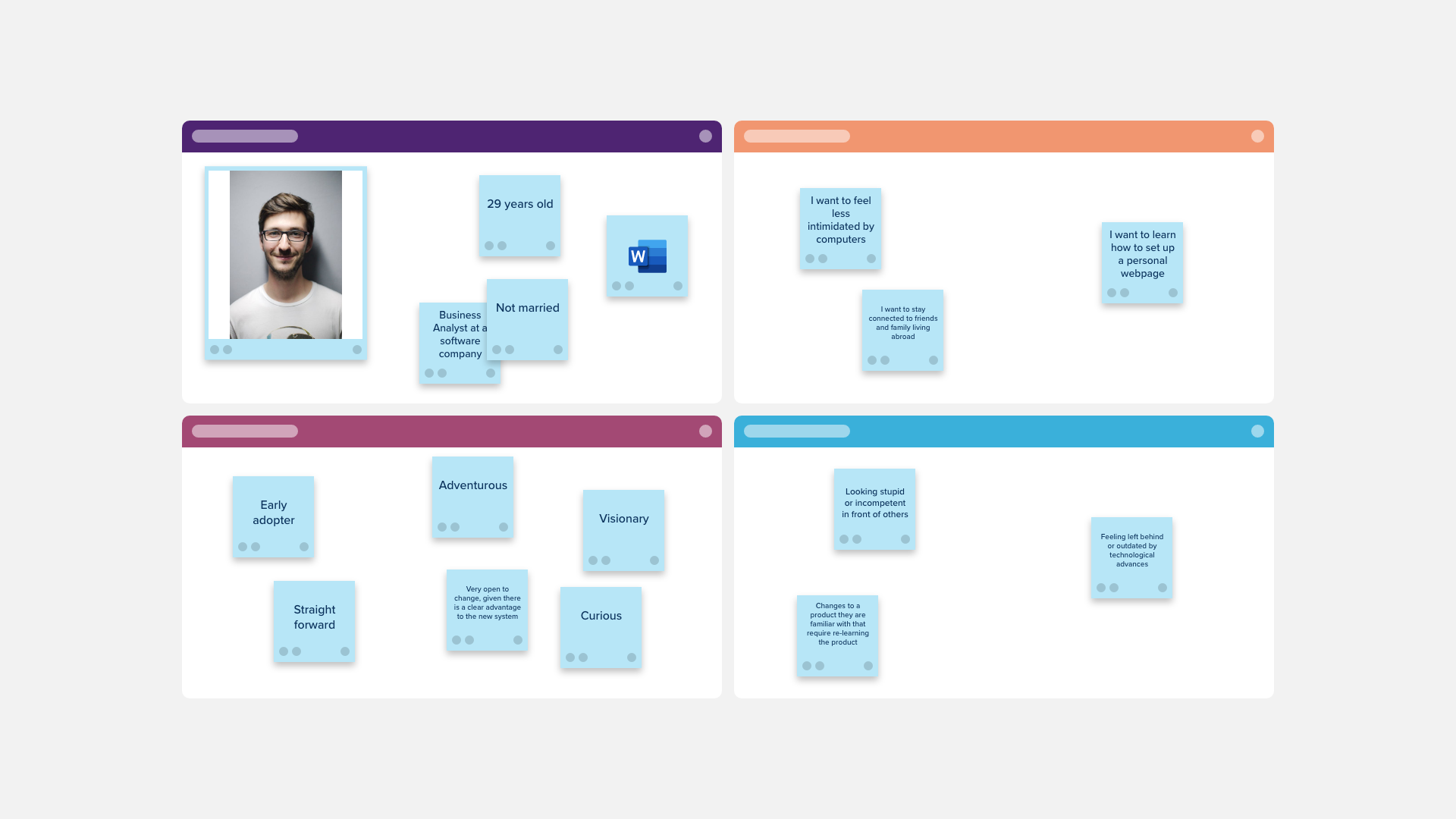
Use the User Persona Matrix to create a detailed description of your customer and learn more about who they are.

Use the User Persona Profile Template to create a detailed description of your ideal customer and learn more about who they are.
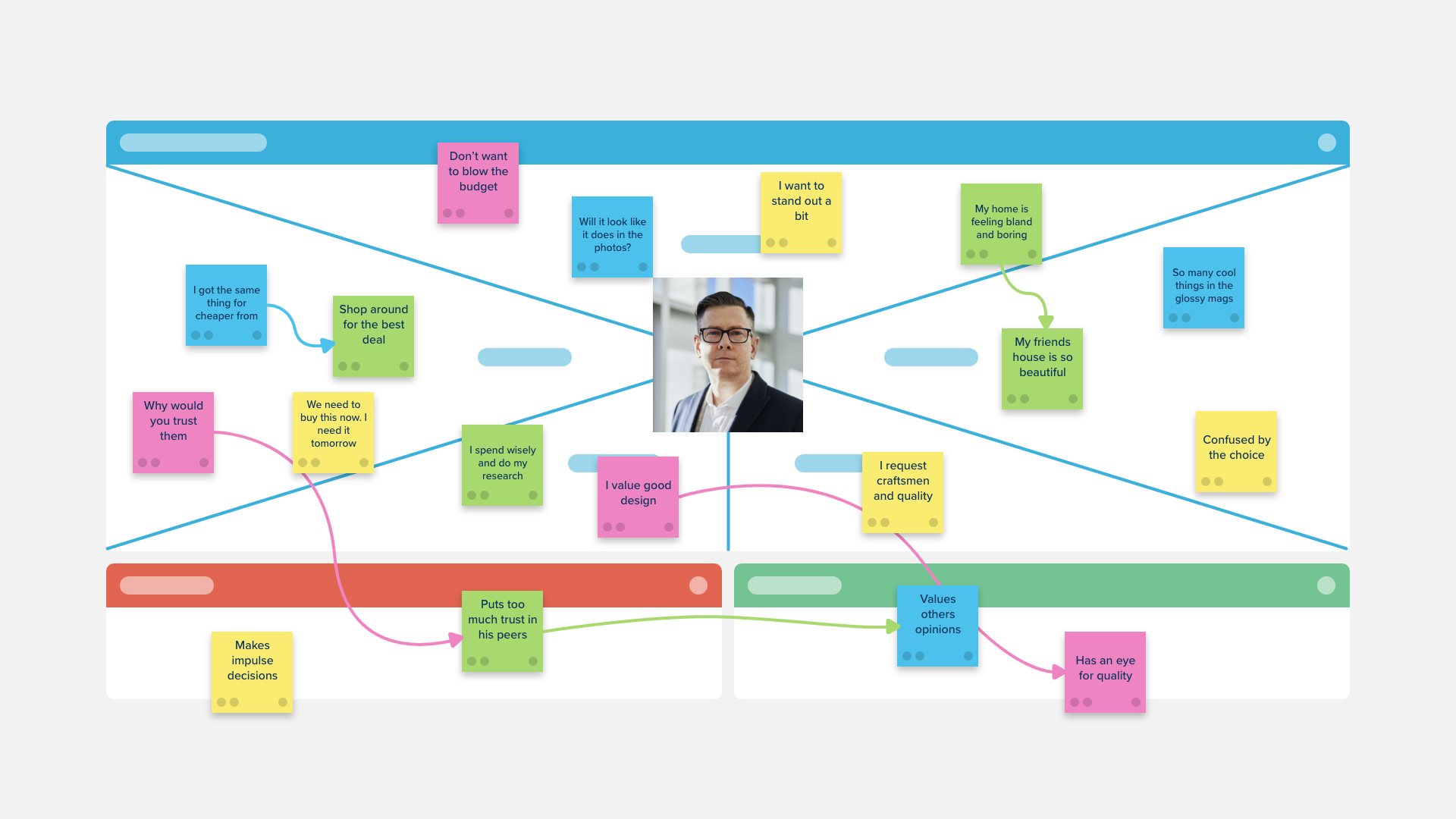
A template purpose-built for male customer and prospects segments, the Stormboard empathy map is a collaborative tool teams can use to gain a deeper insight into their customers.

An empathy map is a collaborative tool teams can use to gain a deeper insight into their customers. Purpose-built for female customer and prospects segments.

You can use the Abstraction Laddering Template to make sure you are solving the right problem the right way. Starting from a pre-defined problem statement, move up the ladder to expand the scope of your problem, or down the ladder to develop more concrete solutions.

The Value Differentiation Evaluation Template helps you to evaluate the meaningful differences between your company’s offerings and your competitor’s offerings.

Use the Alternate Service Blueprint Template to view each step in your service process, from different perspectives within your company. Connect all the elements of your service experience to see how everything, from front line customer interaction to behind-the-scenes administrative work, fits together.
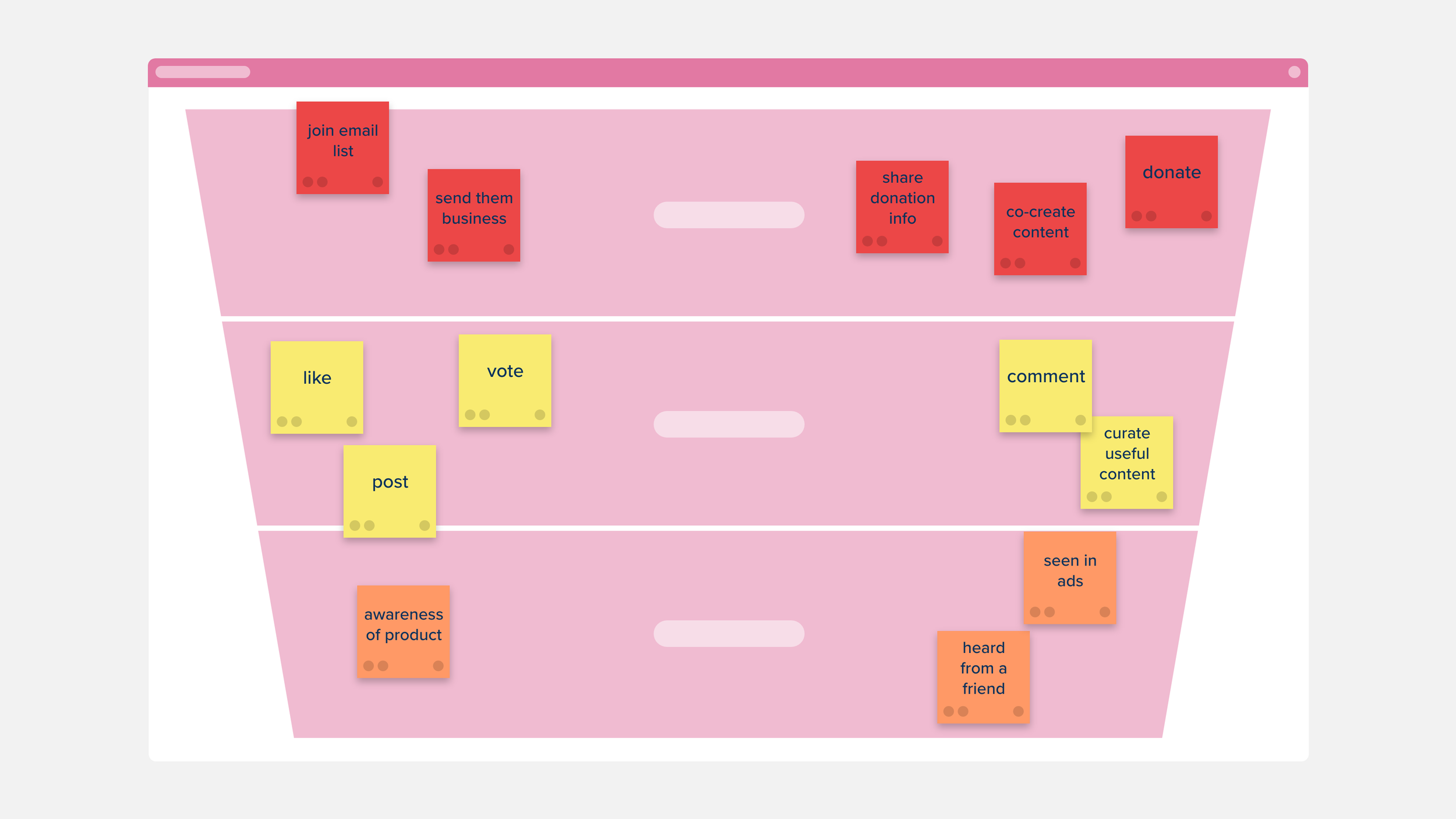
Use the Customer Engagement Funnel to generate ideas to attract users, focus on user growth and retention, and eventually turn your users into advocates for your company. Thoughtfully plot out your development to build a product that endures.

The Customer Buying Motivations Template is designed to help you identify your target customer and their motivations for purchasing your product or service.

Use the Audience Ecosystem Chart Template to learn more about your audience. Gather information about your current users and discover the behavioral shifts that will help you better meet their needs.

Use the Nurturing Client Relationships Template to create a plan for you to acquire clients, find ways of retaining client relationships, and establish methods that can transform the current relationship into something more substantial.

Based on the methodology advocated by entrepreneur and venture capitalist Mark Suster, the PUCCKA Sales Template is divided into six sections for each letter of the acronym: Pain, Unique Selling Proposition, Compelling Event, Champion, Key Players, and Aligned Purchase Process.

The template is divided into four sections: Possible Solutions (options on the table), Objective Criteria, Interests (what are your deeper needs), and BATNA/WATNA.

This Customer Value vs. Time to Market Template will help you understand the customer-perceived value of a product or service versus the time that is takes to hit the market.

Previously known as the BANT framework, this is the updated version known now as the BANTR Sales Template, which is considered to be a better fit for the modern sales process. The goal of this process is to help you find and maintain a steady stream of qualified leads.

The Feature Advantages and Benefits (FAB) Template is used to create FAB statements that are used when either negotiating or selling a product or service in order to explain a feature, what it does (the advantage of it), and how it can benefit the prospective client or customer.