
SWOT Detailed

Description
The SWOT Detailed Template is divided into nine sections that lead you through a SWOT analysis, and then help you focus what you’ve learned and uncovered to develop a strong business strategy for a new business venture, or to re-examine the strategy of your current business.
SWOT is an acronym that stands for strengths, weaknesses, opportunities, and threats. Typically, strengths and weaknesses are internal factors to your company that can be changed or controlled, while opportunities and threats are external factors in the greater market. This detailed template also has you explore a strengths opportunity strategy, strengths threats strategy, weakness opportunity strategy, and weakness threats strategy.
Start your SWOT right away, or read our helpful article: Stormboard 101: How to Perform a SWOT Analysis

Optimize your Agile Release Train with Stormboard’s Dependency Board Template. Track dependencies between tasks, user stories, and features to boost transparency, collaboration, and productivity. Sync with Jira, Rally, or Azure DevOps for seamless, real-time updates and drag-and-drop project management. Discover more now!
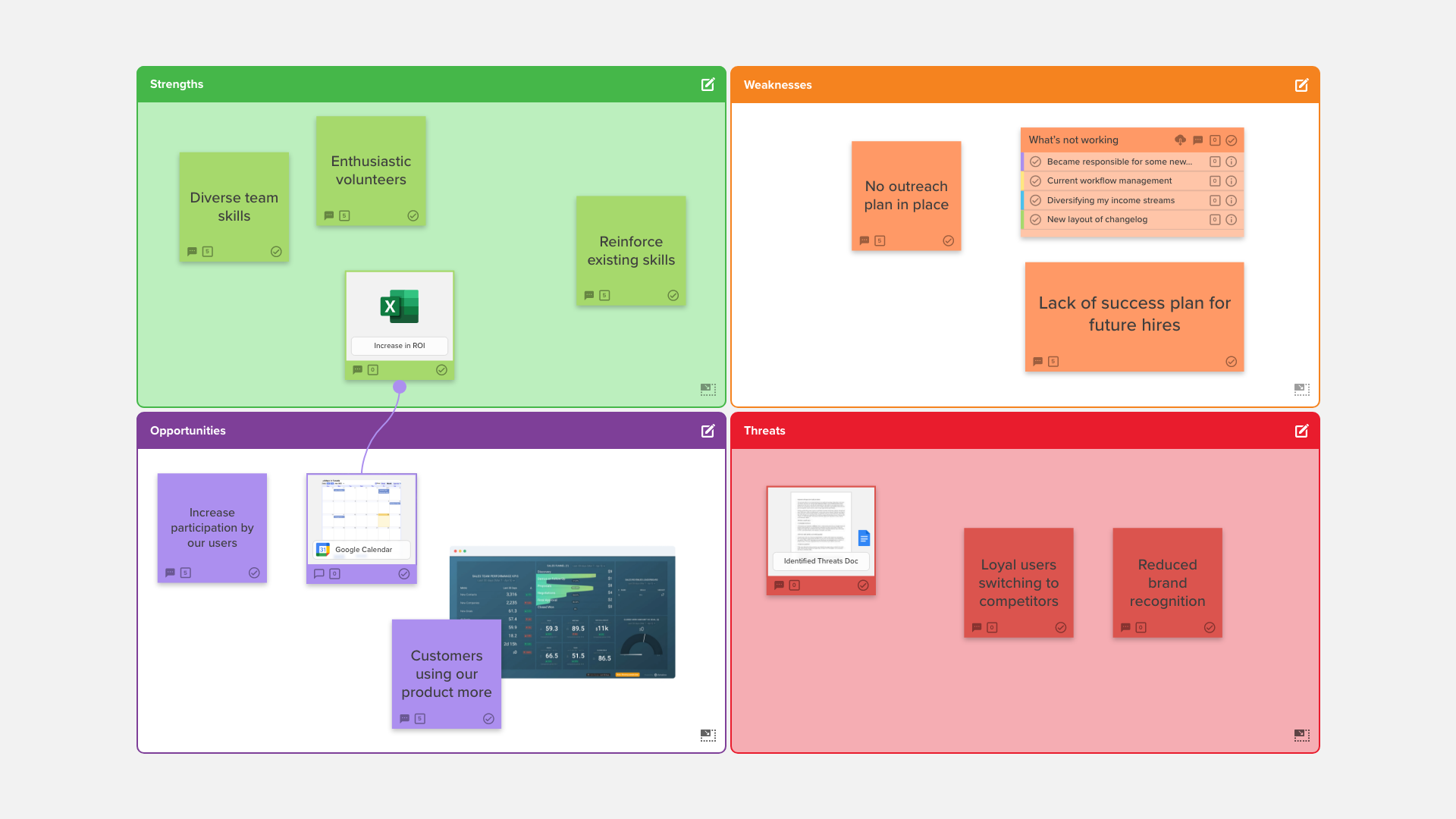
Standing for Strengths, Weaknesses, Opportunities, and Threats, a SWOT analysis is a structured process that helps with strategic planning.
Stormboard's SWOT analysis template helps you develop a strong business strategy for a new business venture, or to re-examine the strategy of your current business.

Identify interesting and important trends, and brainstorm how you can capitalize or how they may affect the way that you conduct business.

The Mind Mapping Template will help you visually structure your thoughts during a brainstorming session.

The Stakeholder Map Template is a visual representation of all the people who can influence your project and how they are connected.

This blank template is divided into 8 sections that you can use to structure your meeting, brainstorm, strategic planning session, project management plan, and more.

Use the Benchmarking Analysis Template to compare your organization’s performance, product, system, or process to the top standards in your -— or any — industry.

A 2 section Stormboard template consisting of large, blank section and a grid, useful for brainstorming and categorizing Risk Factors of a project, and organizing them by any chosen metrics for each axis (like potential, likelihood, impact, etc.)

Evaluate your priorities, both personal and professional, with the Impact vs. Difficulty Matrix Template.

The Project Kickoff Template is used to concisely create clear working agreements, a shared understanding of project success, and to help decide on your next steps.

Use the Project Planning Template to plan for a successful project by defining its purpose, how it will succeed, taking stock of which tools your team has (and will need), and how you plan to address any costs or roadblocks.

Use the Rose, Bud, and Thorn Template to assess your project and find what’s working, what’s not working, and identify any opportunities for improvement.

Use the Content Assessment Matrix to evaluate your current marketing content and messaging to see if it aligns with your future plans to revamp.

Use the Creative Brief Canvas Template as the foundation of your creative brief documentation and to organize your ideas and outline the vision for your creative campaign.

Use the Social Media Measurement Matrix Template to track the engagement resulting from your different social media campaigns, and connect campaign achievements with company and business objectives.

The Communications Plan Template will help you deliver your message to your target audience in the most effective way possible.
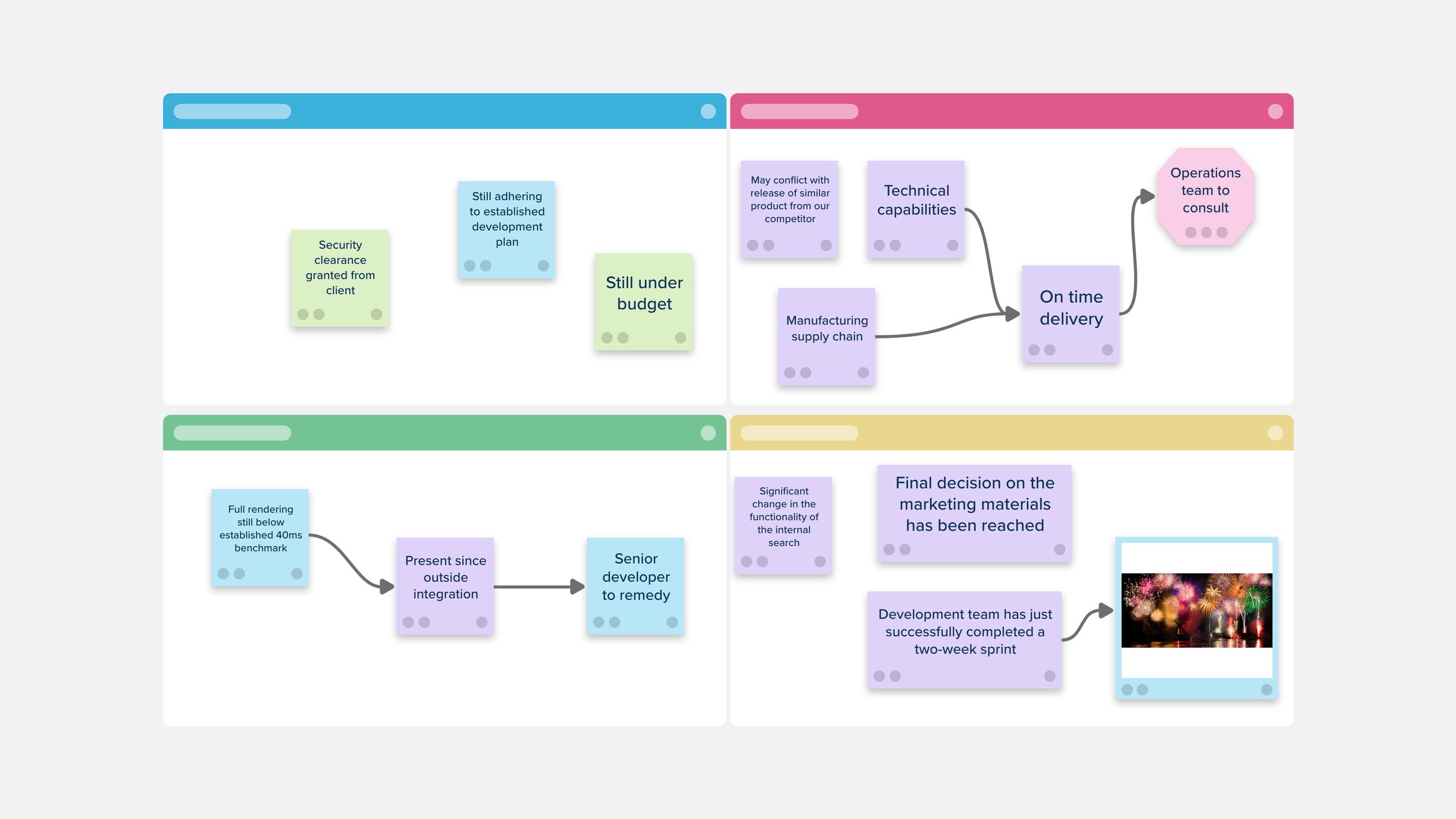
Use the Weekly Status Report Template to build a reporting cadence with your key stakeholders.

The SOAR Analysis Template will help you and your team work together to recognize the potential of your organization and create a shared vision of your future.

Use the User Persona Profile Template to create a detailed description of your ideal customer and learn more about who they are.

The MoSCoW analysis is a popular prioritization technique for managing requirements for your project.

Building a reporting cadence with your investors is a great way to promote transparency and build a relationship focused on trust and open communication.

Evaluate your priorities, add everything that is on your current and future to-do list, and plot each item on the matrix depending on whether it requires high effort, low effort, creates a high impact, or is low impact with the Impact vs. Effort Matrix Template.
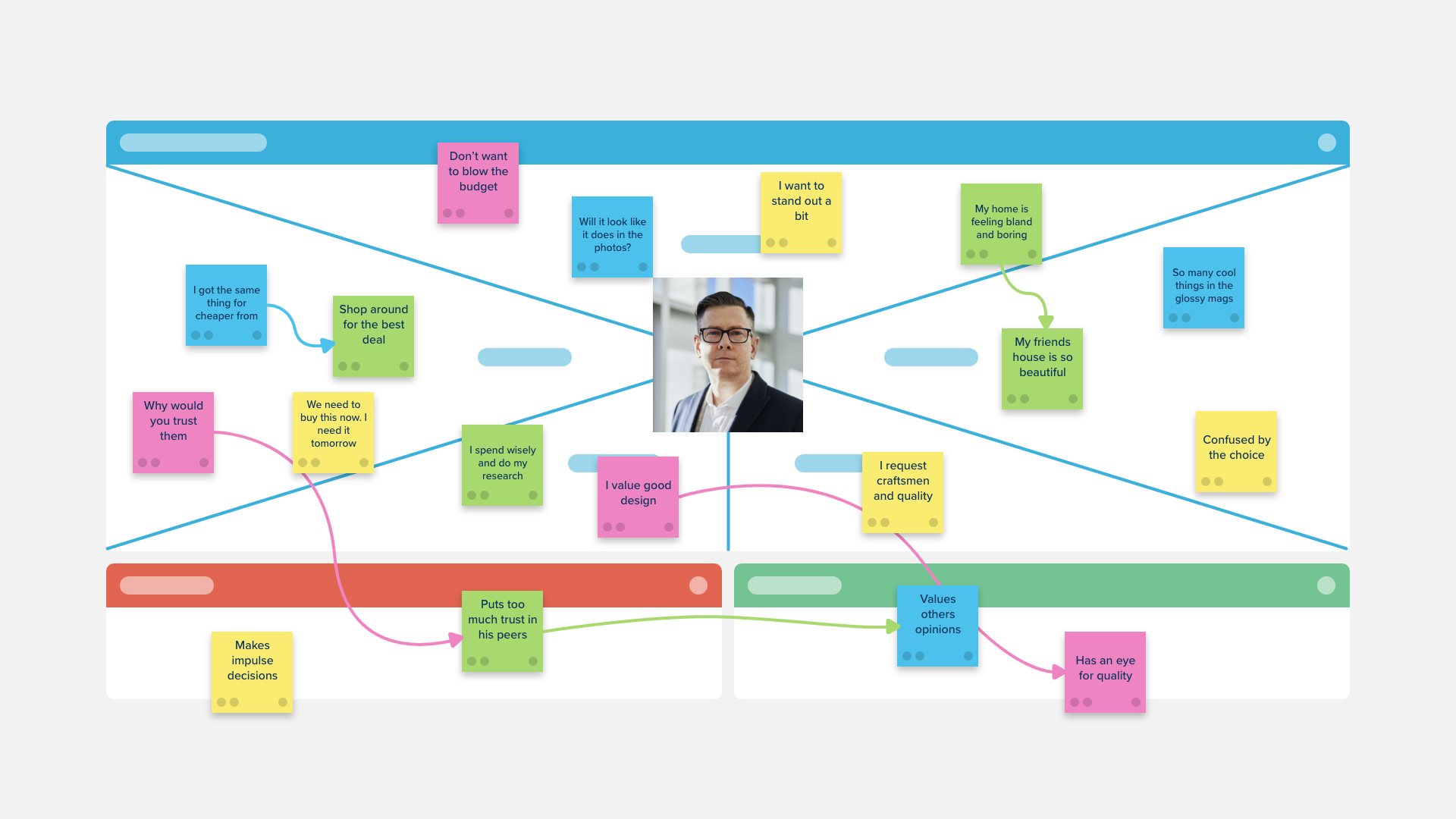
A template purpose-built for male customer and prospects segments, the Stormboard empathy map is a collaborative tool teams can use to gain a deeper insight into their customers.

An empathy map is a collaborative tool teams can use to gain a deeper insight into their customers. Purpose-built for female customer and prospects segments.
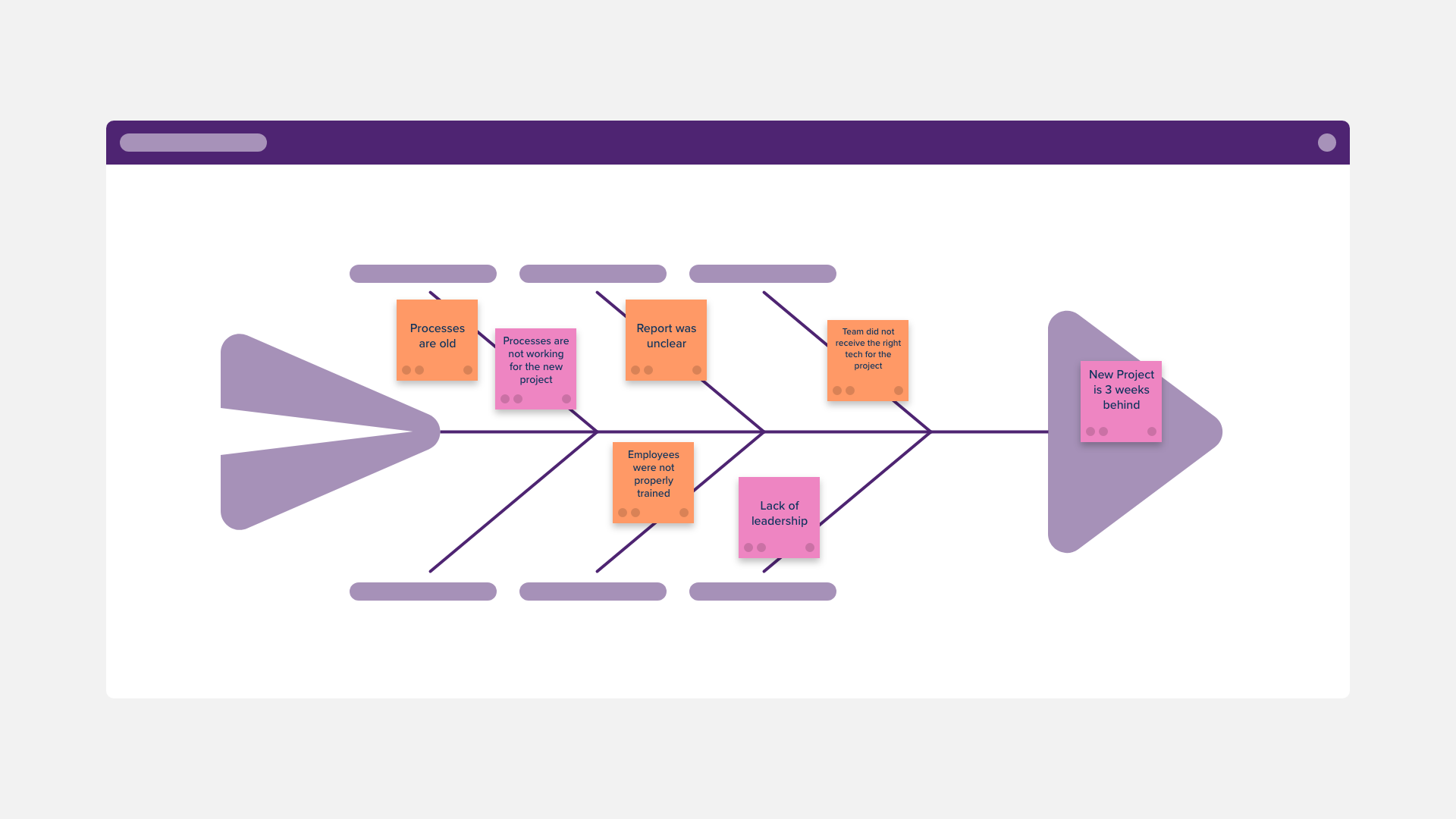
The Fishbone Diagram Template (or Ishikawa Cause & Effect Diagram,) is a used as a retrospective or a visual way to categorize the potential causes of a problem in order to identify its root cause.

This guide will help you outline your team’s purpose and objectives, as well as steps you will take to reach your goals.
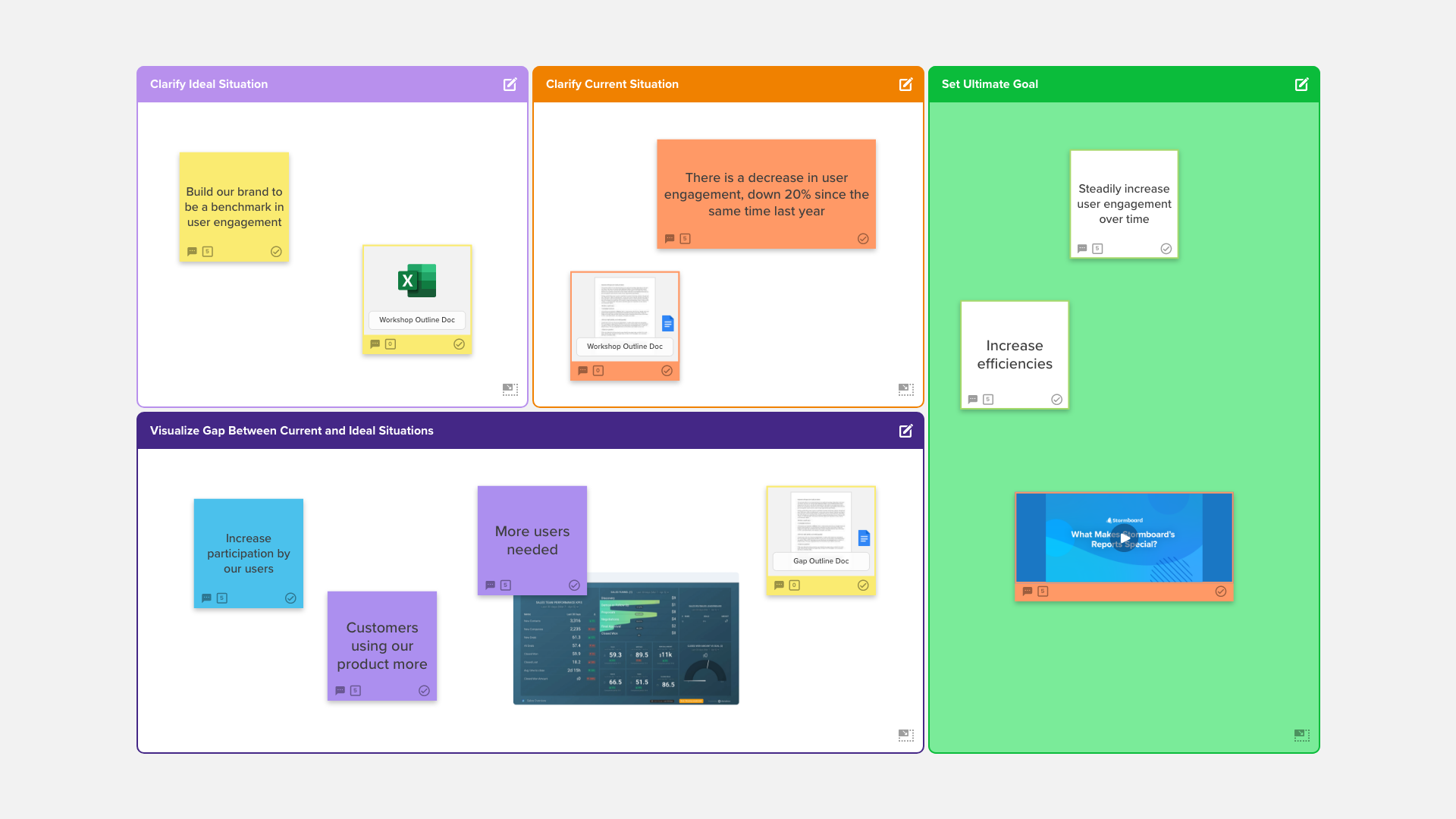
Step 1 of the of the 8 Steps to Problem Solving framework is about Clarifying the Problem and gaining holistic insight into the situation you are analyzing or problem you are trying to solve.

The PEST (political, economic, sociological, and technological) Template is used to assess how these four external factors relate to your current business situation.

This template is perfect for companies of all sizes, you can use the canvas to describe, design, challenge, and rework your current model.

This template is ideal if you are looking for a way to create an actionable, entrepreneur-focused business plan, as it focuses on problems, solutions, key metrics, and key advantages.