
Benefit Comparison
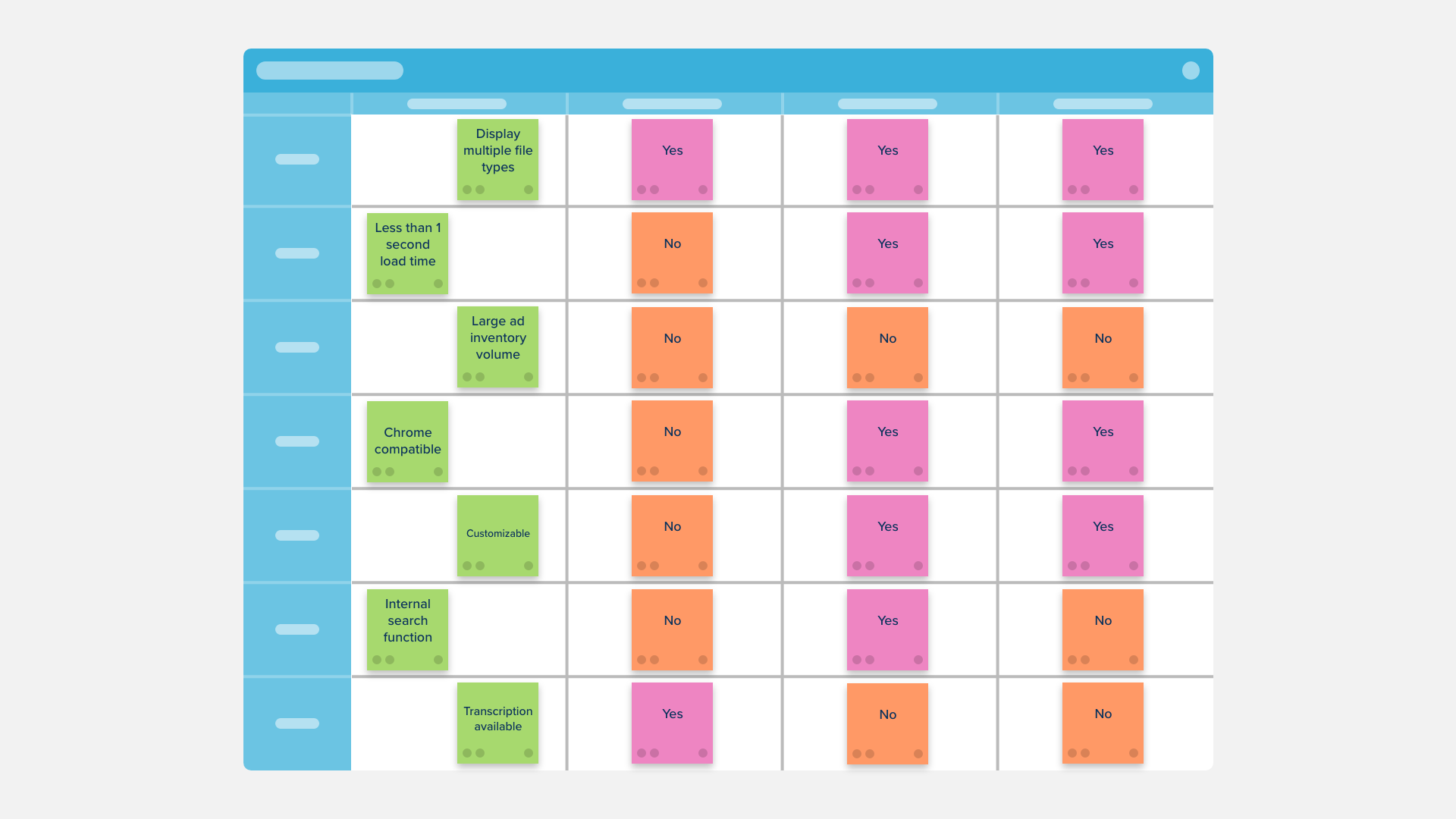
Description
The Benefit Comparison Template is set up to help you compare your product to three of the products of your direct competitors. The template in its current configuration allows for seven different criteria to be used such as features, price, size, and any other information regarding the products.
Because this template is clean, organized, and can be customized with different colors and labels, it is perfect for you to use in presentations to clients, customers, management, and anyone else you are meeting with to highlight the best aspects of your product.

Transform the data collected in your Customer Voice Canvas into actionable workflows.

View your product roadmap in three timelines: the six-year view, the six-month view, and the six-week view.

Categorize and list what you know about your customers and potential users and create a detailed examination that will allow you to turn data and observations into actionable insights.

Use the Customer Impact vs Customer Expectations Template to refine your product based on the impact individual features will have on your customer experience.
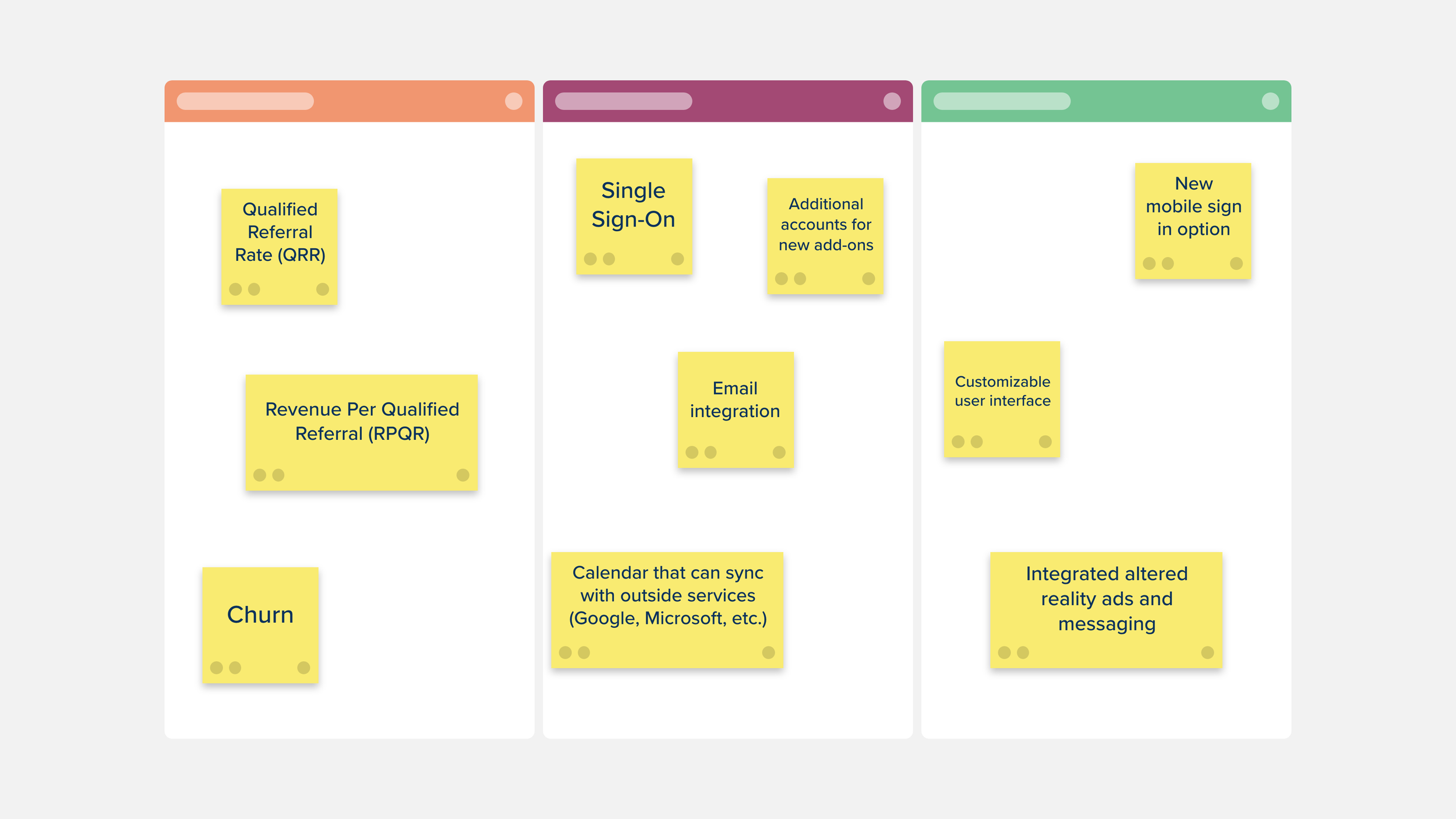
Use the Three Feature Buckets Template to organize your ideas on a future feature release.

Use the Stakeholder Analysis Matrix Template to visualize all your stakeholders and determine their expectations. Ensuring that all those affected will be considered in the development of your project.

The Stakeholder Map Template is a visual representation of all the people who can influence your project and how they are connected.
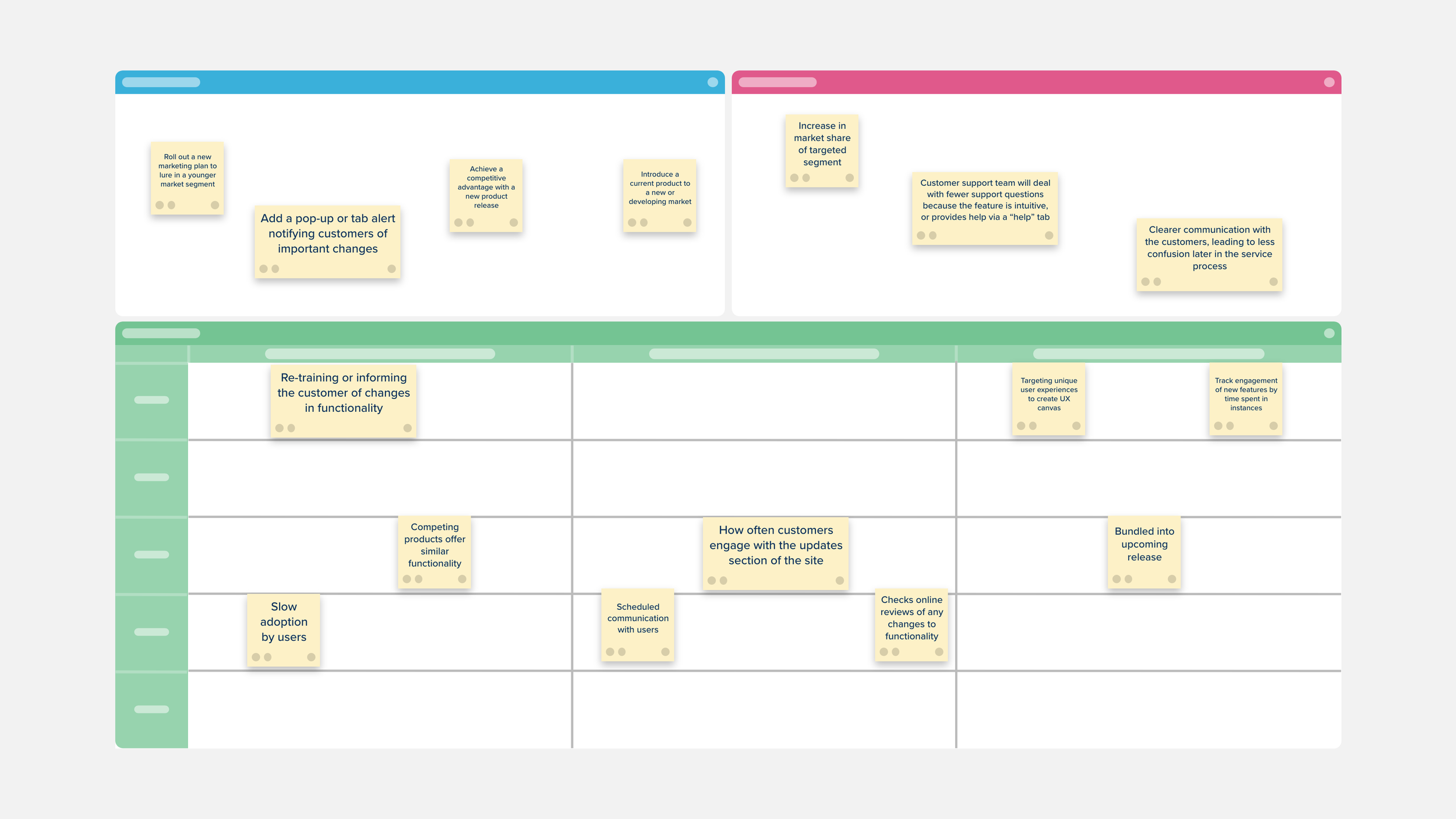
The Customer Voice Canvas is a space to challenge the conventional knowledge of customer engagement and take a more strategic and targeted approach to customer feedback.

Compile and arrange user stories to create a more holistic view of how they fit into the overall user experience. Then track how you interact with your users through a set of revisions.

Separate your findings into primary and secondary sources.

This template is used to provide clarity when making changes to your product, and will allow you to trace your feature’s development from conception to outcome to make sure it is the right move for your company.
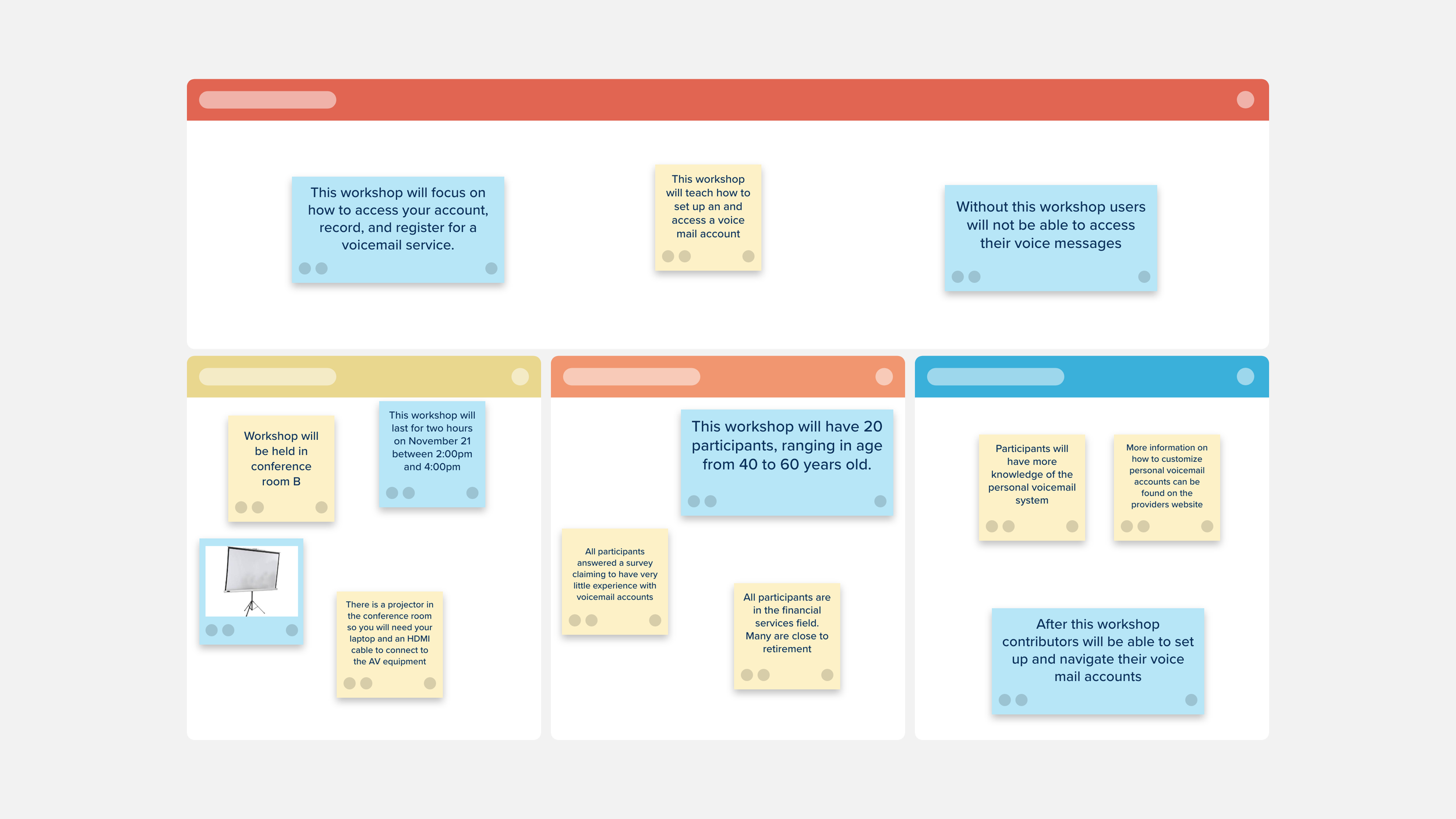
Prepare for your workshop by organizing and planning for success.

The Project Kickoff Template is used to concisely create clear working agreements, a shared understanding of project success, and to help decide on your next steps.

Use the Project Planning Template to plan for a successful project by defining its purpose, how it will succeed, taking stock of which tools your team has (and will need), and how you plan to address any costs or roadblocks.

Popular for setting goals in organizations of any size. The Objectives and Key Results (OKR) Template connects your larger personal or professional objectives to specific, measurable, concrete results.

Use the Content Assessment Matrix to evaluate your current marketing content and messaging to see if it aligns with your future plans to revamp.

Use the Design Project Management Template to stay on top of your workflow by prioritizing and tracking your design work and keeping your team focused on the progress and timeline of their design tasks.

Use the Service Blueprint Template to view each step in your service process from a different perspective within your company.
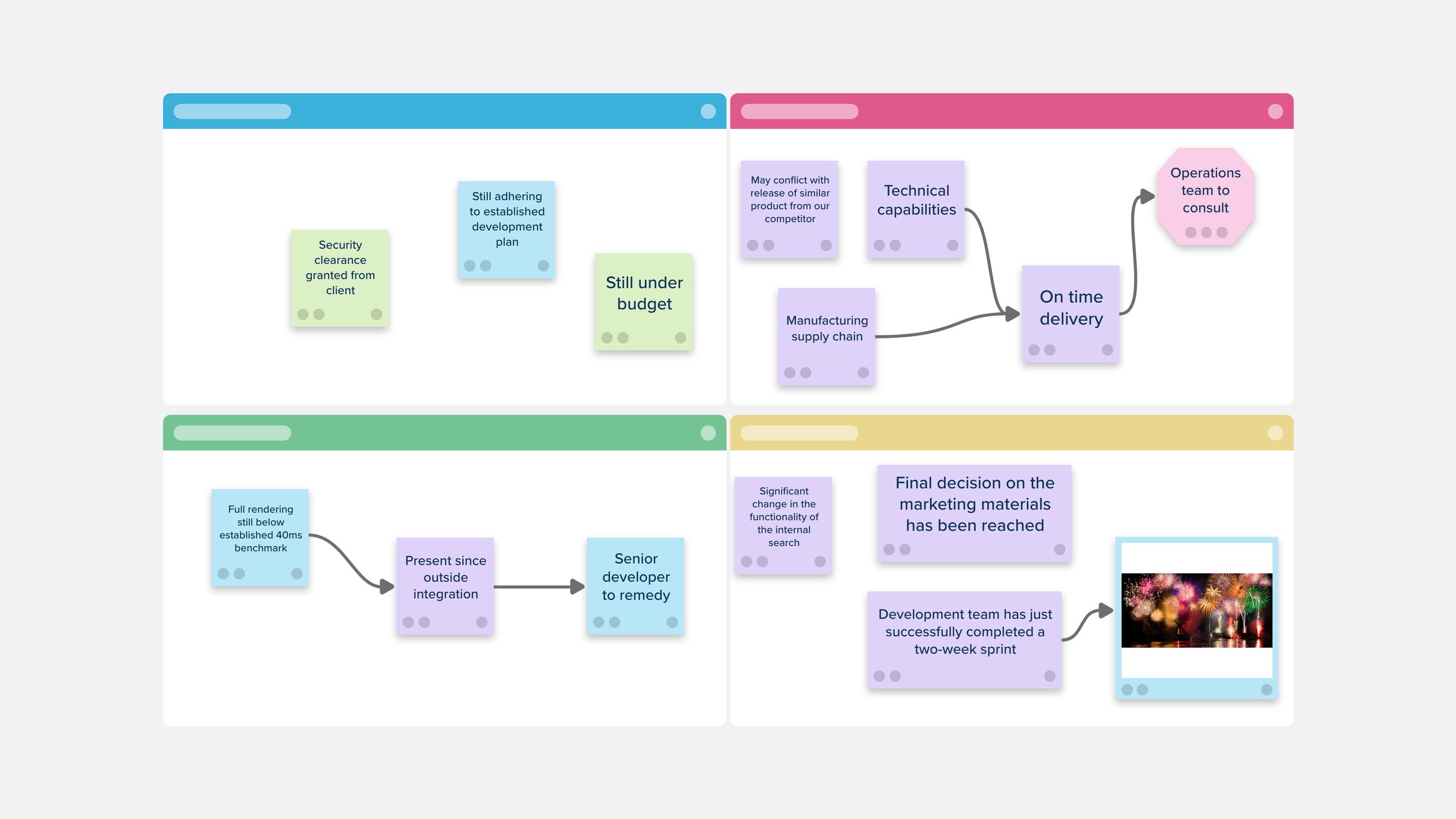
Use the Weekly Status Report Template to build a reporting cadence with your key stakeholders.

The Product Requirement Document Planning Template helps your team pull together and organize all of the content that you will need to include in your final Product Requirement Document.

The 4L Retrospective Template will help your team review their work and focus on gathering information to improve future processes.

The Team Retrospective Template is made to help your team review their latest iteration, sprint, or project and decided which actions to take to improve their process.

UX User Interviews help design and product teams discover what drives your users toward your product and find better ways to serve them.

Visualize all of the places, or touchpoints, that your customer comes in contact with your company, product, or service both online and off with the Customer Journey Map Template.

The Scenario Mapping Template can be used to better understand your user’s process and help identify areas that you can improve.
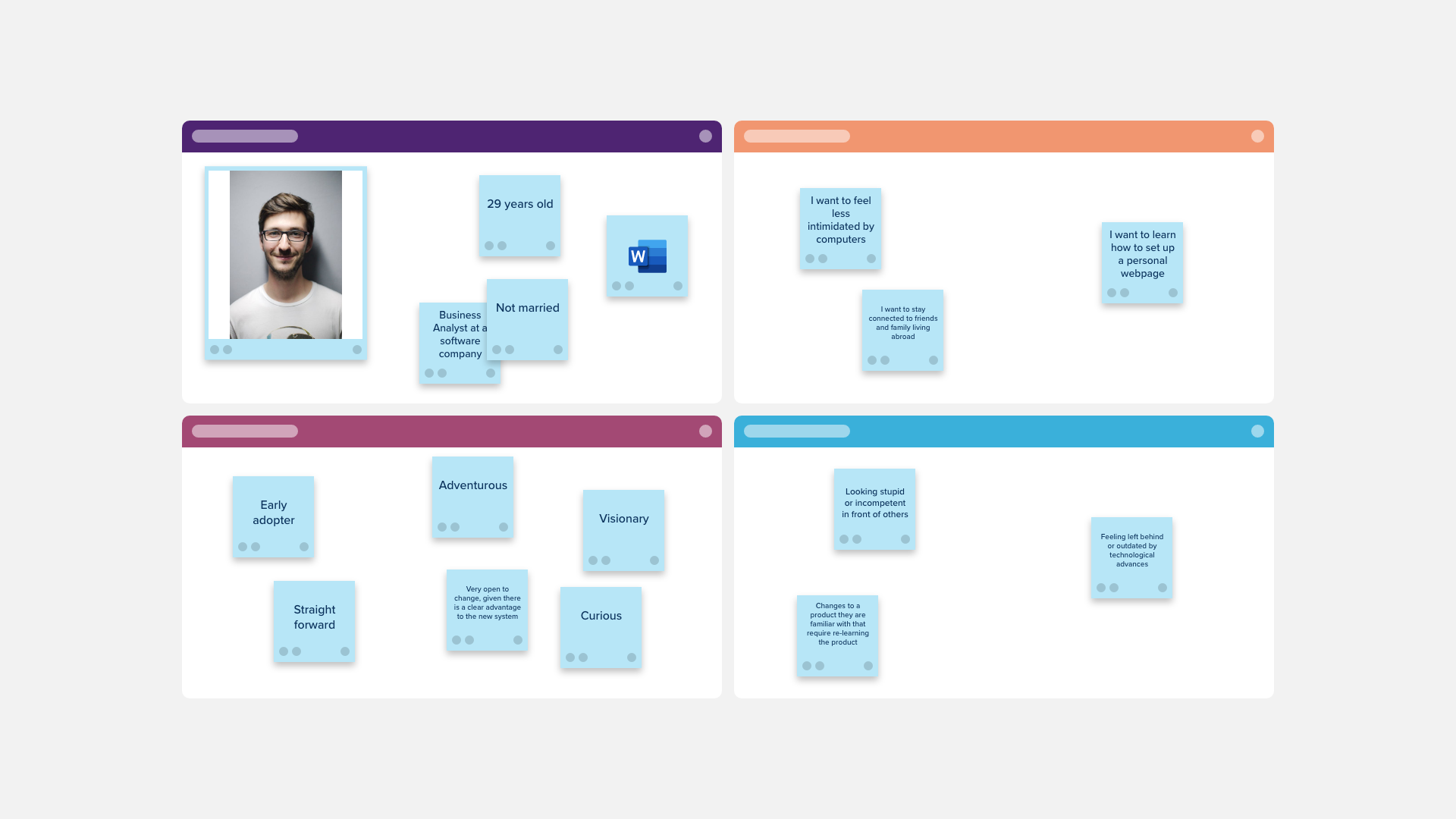
Use the User Persona Matrix to create a detailed description of your customer and learn more about who they are.

Use the User Persona Profile Template to create a detailed description of your ideal customer and learn more about who they are.

The MoSCoW analysis is a popular prioritization technique for managing requirements for your project.

Determine which ideas are most important to your project and which to execute first.
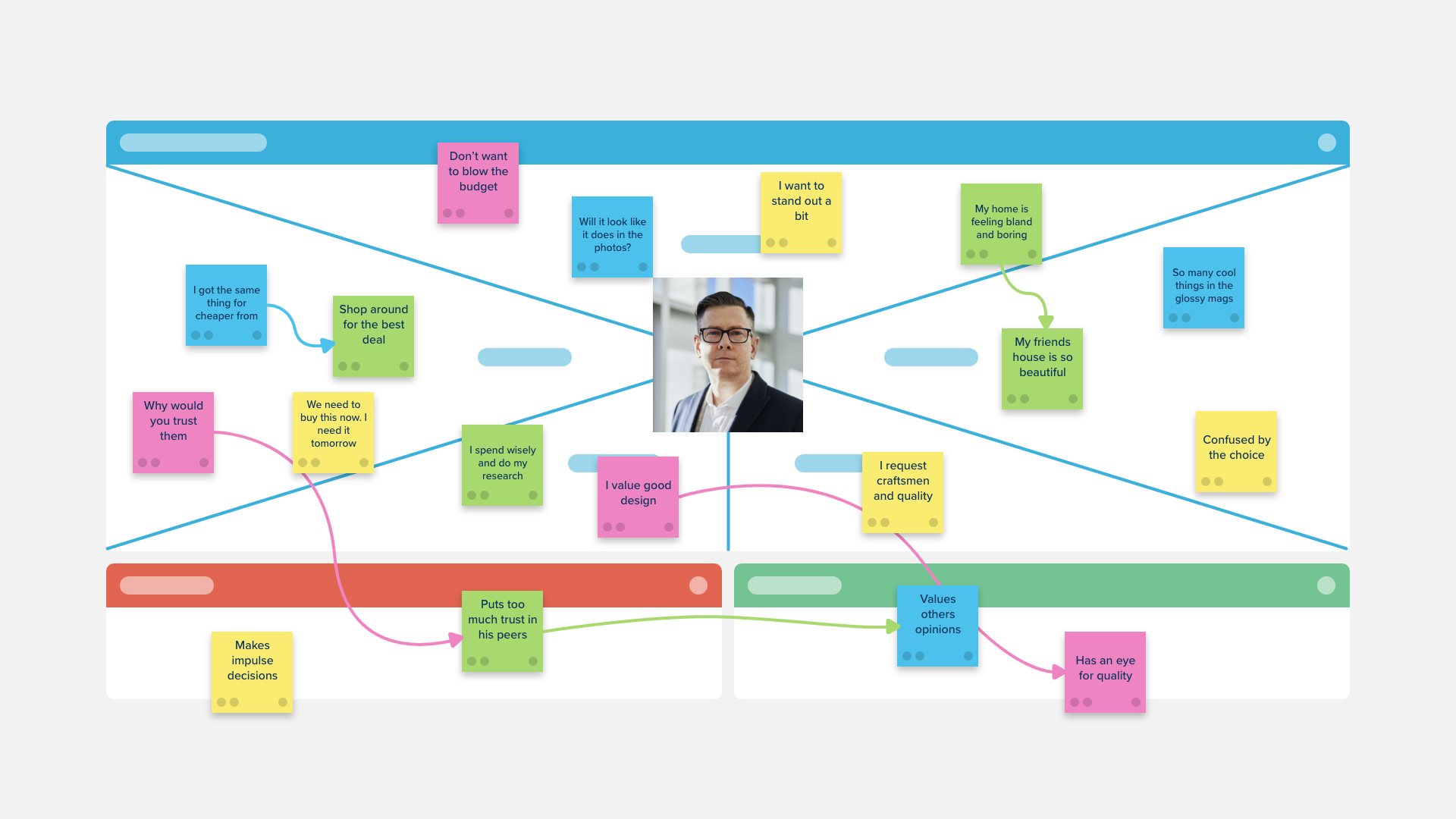
A template purpose-built for male customer and prospects segments, the Stormboard empathy map is a collaborative tool teams can use to gain a deeper insight into their customers.